This article is for health education purposes only and is for informational reference; it does not constitute medical advice. If you have health concerns, please consult a professional doctor.
After forty, your food intake hasn't increased, your drinking hasn't gone up, yet your belt moves out one notch at a time. Most people blame this on "not being able to control their mouth," but there is one indicator that is quietly declining during this decade—testosterone.
It's not just about sex drive; it also involves muscle, fat, and blood sugar. Whether you should get tested—first look at whether your body shows these signals.
Let's start with the data. In a cross-sectional study of 795 middle-aged and older Chinese men, 27.2% had low testosterone[1]. In another study of 1,166 men in western China, among those aged 40 to 89, 15.2% had free testosterone below the lower reference limit for young adults, and 26.3% had a low testosterone secretion index[2].
Put these two numbers together and the meaning is plain: after forty, one in every six or seven men has already fallen out of the normal range on this measure, and most have never once had their blood drawn for it.
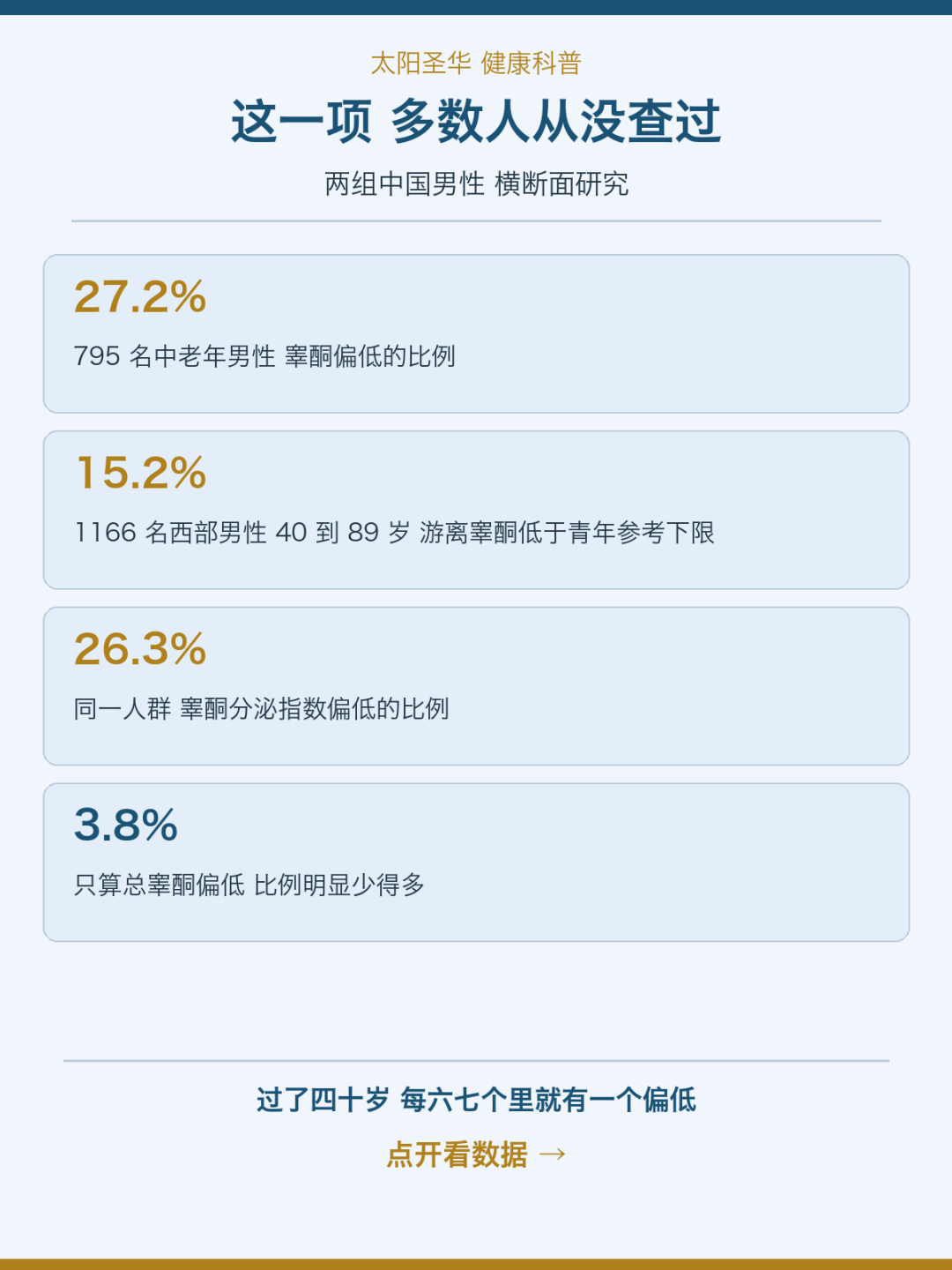
Caption: In two Chinese male cohorts, the detection rate of low testosterone was far higher than the 3.8% found when only total testosterone was counted.
✦ 1. Normal total testosterone does not mean there's no problem
Most health checkups only test total testosterone. But the 1,166-person study above found that total testosterone was almost flat between the young group and the over-forty group: 16.88 versus 16.82 nanomoles per liter, with no statistical difference[2].
What actually declines is free testosterone and the testosterone secretion index. Free testosterone dropped from 0.37 to 0.30 nanomoles per liter, and the proportion with low levels rose from 3.8% to 15.2%—about a fourfold difference[2].
The reason isn't hard to understand. As age increases, sex hormone-binding globulin rises, locking more testosterone into the bound state; the total hasn't changed, but the usable portion has decreased.
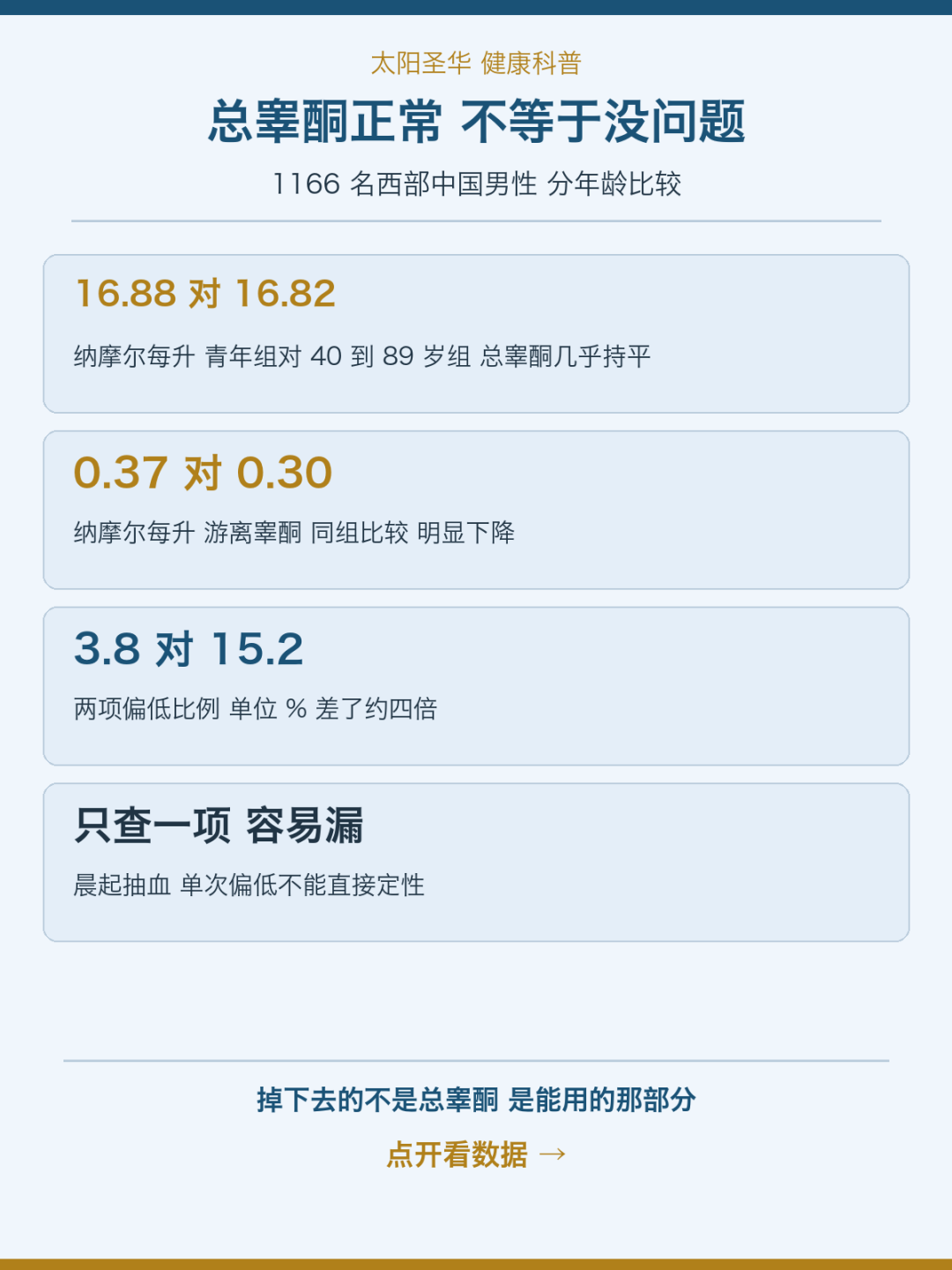
Caption: Total testosterone was nearly identical between the two groups; what actually declined was free testosterone and the testosterone secretion index.
✦ 2. Waist circumference says more than body weight
In the same study, the higher the waist-to-height ratio, the lower the total testosterone, sex hormone-binding globulin, and secretion index[2]. A review on obesity and testosterone summarized this relationship as bidirectional: more fat suppresses testosterone, and low testosterone makes it easier to accumulate fat in the abdomen[3].
The 795-person study also drew a J-shaped curve—the relationship between body mass index and low testosterone is not a straight line, with the inflection point at 19.2, and the risk ratios on either side of the inflection point being 0.6 and 1.2 respectively[1]. So being too thin also needs attention; thinner is not always better.
In practice, divide waist circumference by height—if it exceeds 0.5, it's worth starting to manage. This ratio is far more sensitive than the number on the scale.
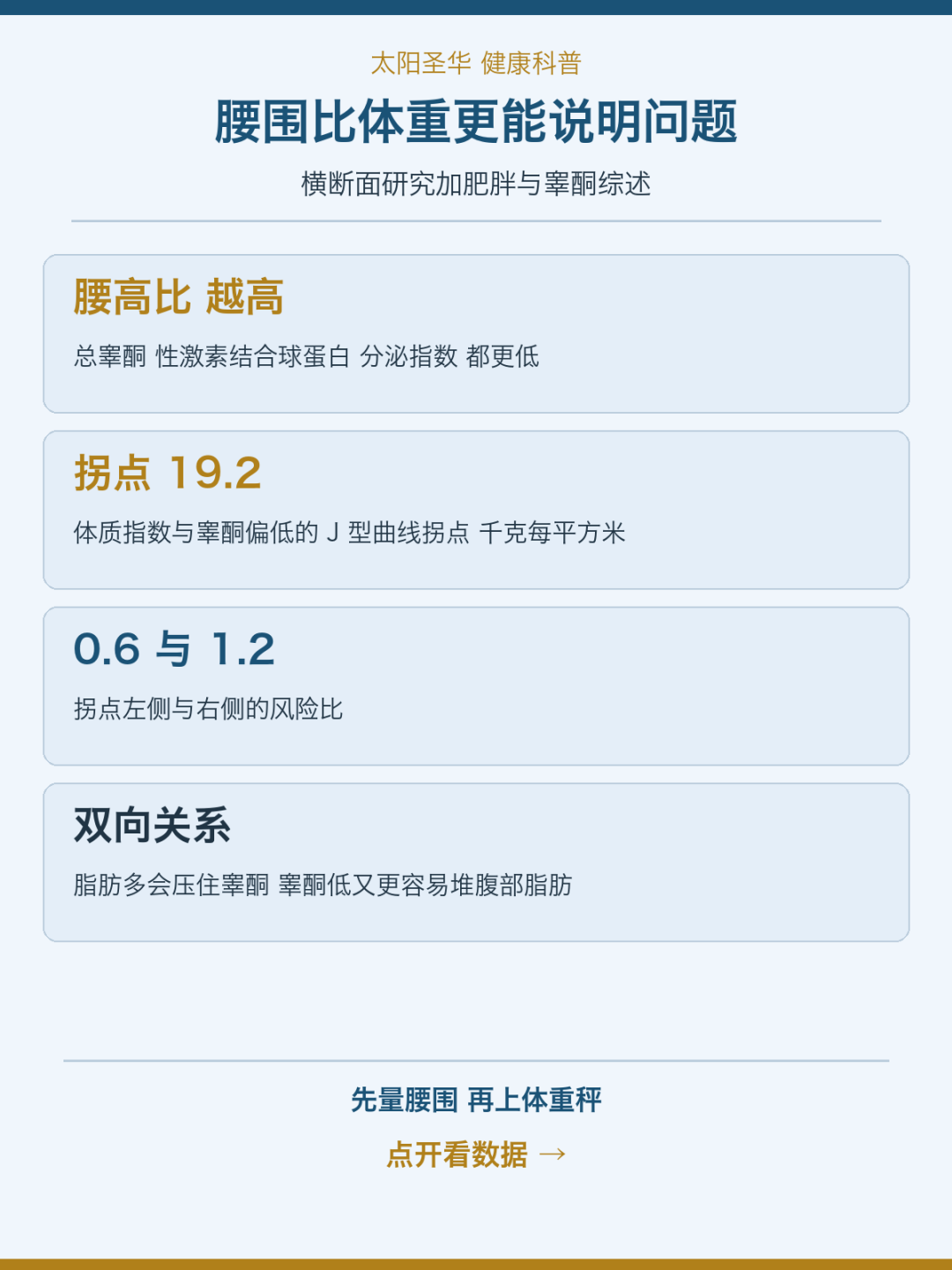
Caption: Waist-to-height ratio is negatively correlated with testosterone levels, while body mass index and low testosterone show a J-shaped relationship.
✦ 3. People with low testosterone often have unfavorable blood sugar too
A meta-analysis of 43 studies and 6,427 men showed that the group with higher testosterone had a 42% lower risk of type 2 diabetes than the lowest group, with a risk ratio of 0.58 and a 95% confidence interval of 0.39 to 0.87; among people with diabetes, total testosterone was on average 76.6 nanograms per deciliter lower[4].
To be clear: this is an association from observational studies, and which comes first is still uncertain. But the direction is clear—checking testosterone alongside blood sugar is not superfluous, and vice versa.
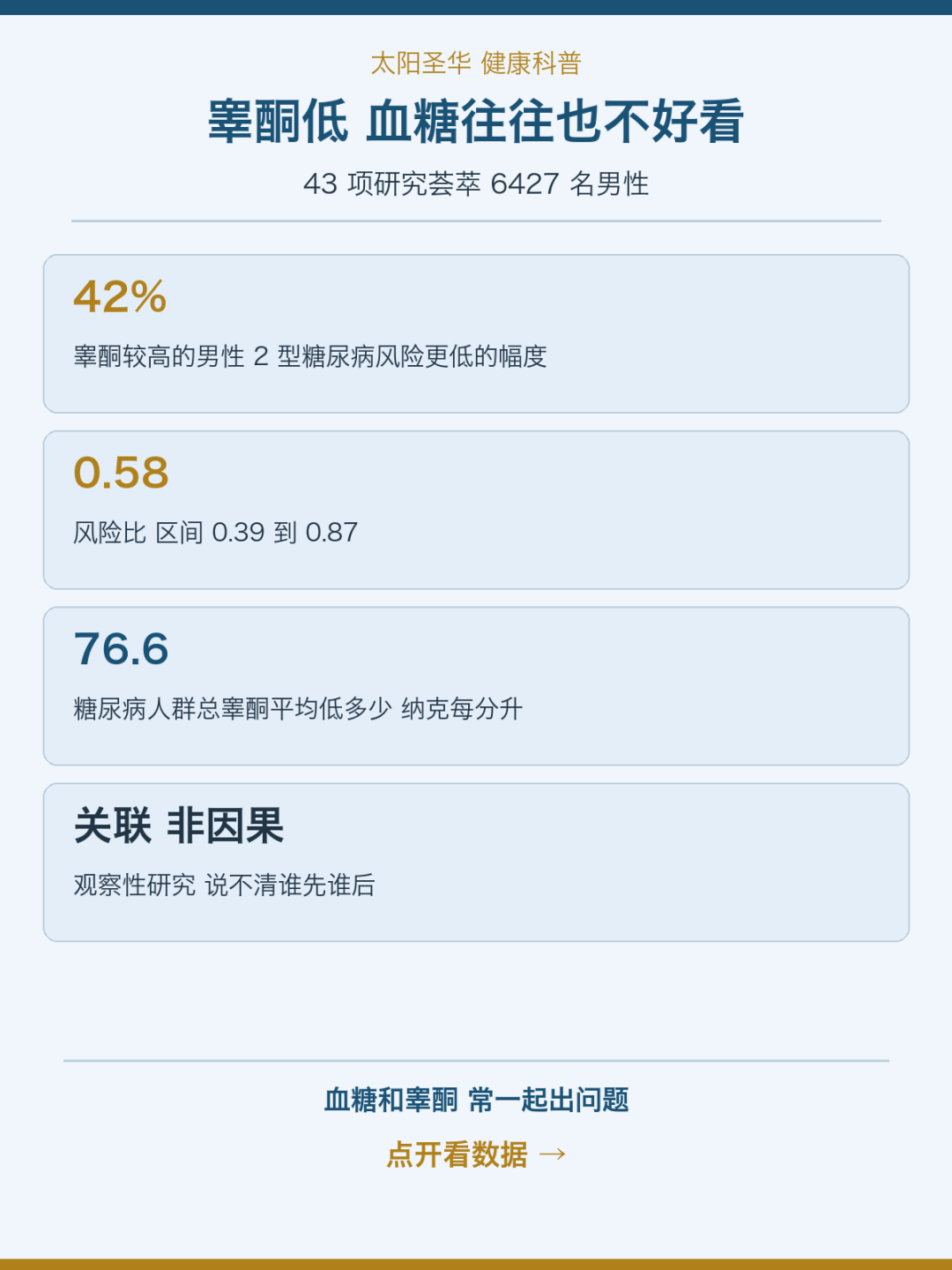
Caption: Men with higher testosterone have about a 42% lower risk of type 2 diabetes; people with diabetes have lower average total testosterone.
✦ 4. Staying up late and testosterone—not as direct as you'd think
The internet often says that staying up late for a week drops testosterone by ten percent. A meta-analysis of 18 studies and 252 healthy men gives an answer that depends on the category: total sleep deprivation for more than 24 hours significantly reduces testosterone, with a pooled effect size of 0.64 standard deviations; while short-term partial sleep insufficiency showed no significant difference[5].
In other words, the impact of all-nighters is clear, but the impact of routinely sleeping one or two hours less is still being studied. Don't scare yourself with "one night of staying up and it's over," and don't treat long-term sleep deprivation as no big deal.
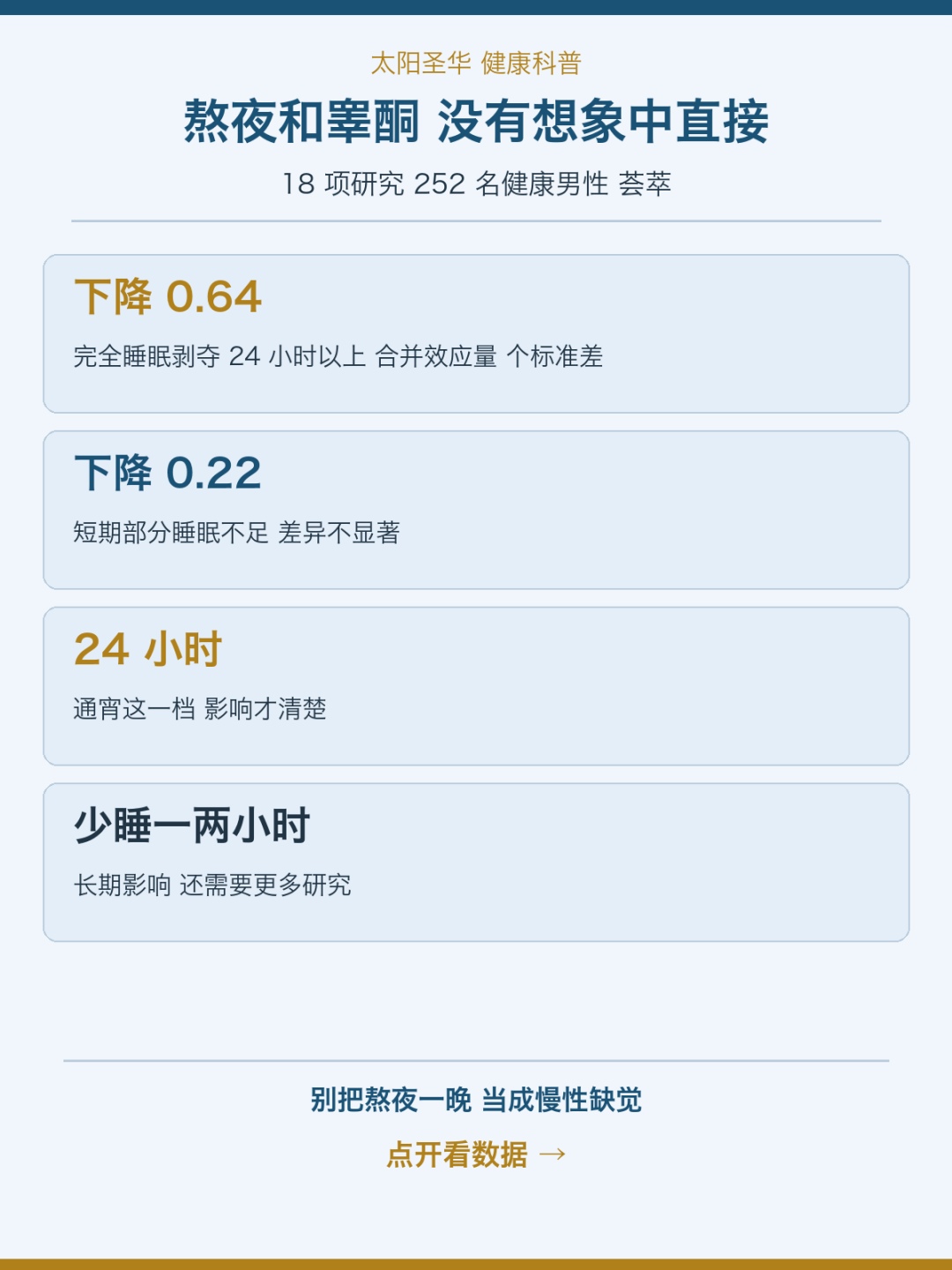
Caption: Total sleep deprivation exceeding 24 hours significantly reduces testosterone; short-term partial sleep insufficiency showed no significant difference.
✦ 5. What you can do today matters more than supplements
Measure your waist-to-height ratio once—if it exceeds 0.5, start managing it; do resistance training twice a week—squats, push-ups, resistance bands all count—to preserve muscle first; bring your weight down—reviews show testosterone can recover after weight loss[3]; keep your sleep schedule stable and avoid long-term sleep deprivation; if decreased libido, fatigue, and reduced morning erections appear together, go to an endocrinology or men's health department for a checkup, get blood drawn in the morning, and don't buy supplements of unknown origin on your own.
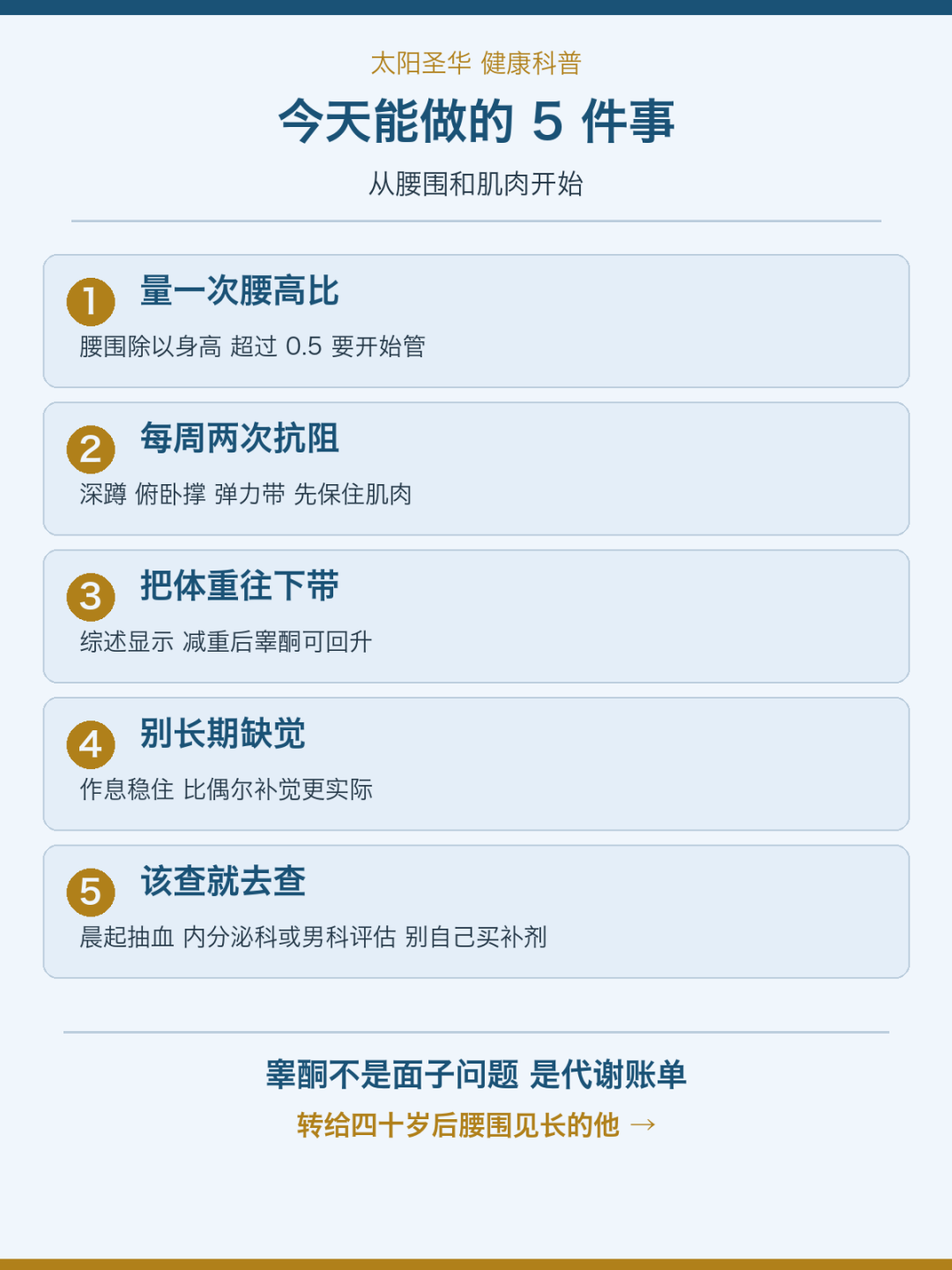
Caption: Five actionable steps—measure waist-to-height ratio, resistance training, weight loss, stabilize sleep, and seek medical evaluation when necessary.
Testosterone is not a matter of pride—it's a metabolic bill. After forty, managing your waistline and sleep is more useful than staring at the scale.
If this article has been helpful to you, give it a like or a "reading" click, and feel free to leave a comment telling us what topics you'd like to see. Also, please forward it to that guy whose waistline has been growing since forty.
✦ Disclaimer: This article is for health education purposes only and is for informational reference; it does not constitute medical advice. The data cited come from publicly published observational studies and meta-analyses, which can only demonstrate association and do not equate to causation. Whether medication or other treatment is needed must be evaluated by a professional doctor. Conflict of interest statement: This article does not involve any recommendation of drugs, health supplements, or devices, and has no financial relationship with the research institutions mentioned in the text.
References
[1] Wu Y, Xu D, Shen H, Qian S. The association between body mass index and testosterone deficiency in aging Chinese men with benign prostatic hyperplasia: results from a cross-sectional study. Aging Male. 2020;23(5):841-846. PMID: 31058560 [2] Shen X, Wang R, Yu N, Shi Y. Reference Ranges and Association of Age and Lifestyle Characteristics with Testosterone, Sex Hormone Binding Globulin, and Luteinizing Hormone among 1166 Western Chinese Men. PLoS One. 2016;11(10):e0164116. PMID: 27711240 [3] Kelly DM, Jones TH. Testosterone and obesity. Obesity Reviews. 2015;16(7):581-606. PMID: 25982085 [4] Ding EL, Song Y, Malik VS, Liu S. Sex differences of endogenous sex hormones and risk of type 2 diabetes: a systematic review and meta-analysis. JAMA. 2006;295(11):1288-1299. PMID: 16537739 [5] Su L, Zhang S, Zhu J, Wu J. Effect of partial and total sleep deprivation on serum testosterone in healthy males: a systematic review and meta-analysis. Sleep Medicine. 2021;88:267-273. PMID: 34801825
© 2026 Sunshenghua (Beijing) Medical Technology Co., Ltd.