This article is for health education purposes only and is intended for informational reference; it does not constitute medical advice. If you have any health concerns, please consult a professional doctor.
✦ ✦ ✦
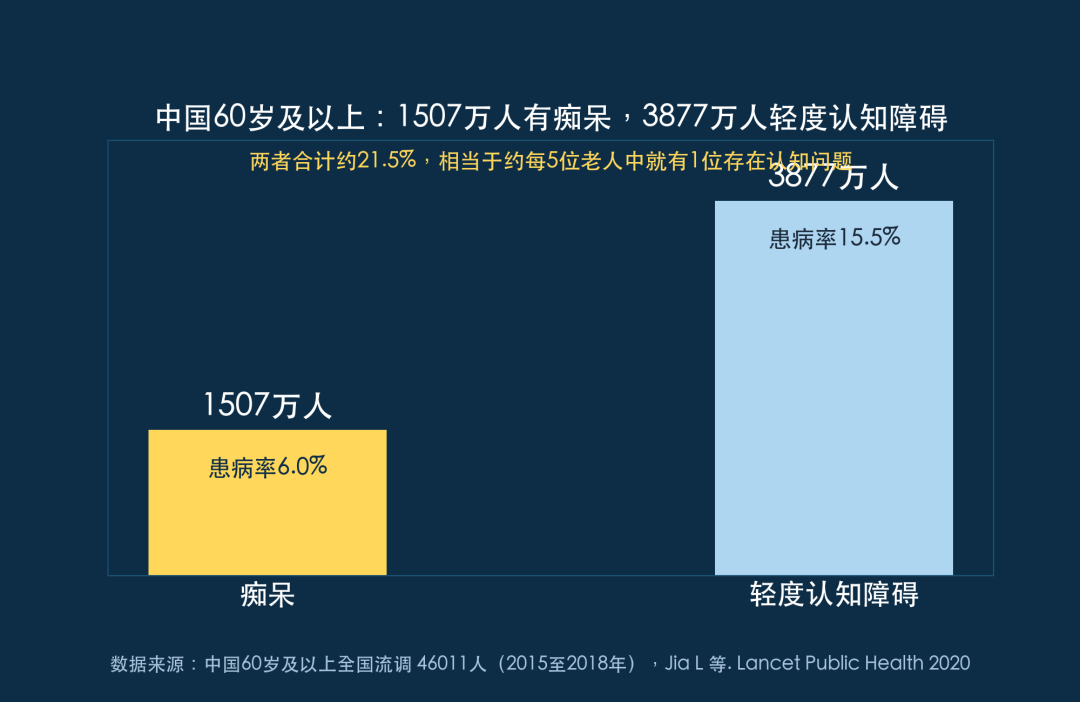
September 21 is World Alzheimer's Day, and the entire month of September is also known as "World Alzheimer's Month"[3]. Before discussing the topic of "brain aging," let's look at a set of unavoidable data: globally, more than 57 million people are living with dementia (World Health Organization 2021 estimate), with nearly 10 million new cases each year—on average, a new diagnosis appears every 3 seconds or so[3]. China faces a similarly heavy burden—among people aged 60 and above, approximately 15.07 million have dementia and approximately 38.77 million have mild cognitive impairment[2]; combined, this is about 21.5%, meaning roughly 1 in every 5 older adults has some degree of cognitive problem.
✦ ✦ ✦
Good news: nearly half of dementia cases need not have happened
When it comes to dementia, many people immediately think "untreatable, unavoidable." But the 2024 report from the Lancet Commission on dementia prevention, intervention, and care offers a different conclusion: about 45% of dementia cases can be prevented or delayed through intervention on risk factors[1].
The Commission organized the modifiable risk factors across a person's lifetime into 14 items: less education, hearing impairment, high LDL cholesterol, hypertension, midlife obesity, excessive alcohol consumption, traumatic brain injury, smoking, depression, physical inactivity, diabetes, social isolation, air pollution, and vision impairment—and estimated that if these factors were well managed, nearly half of dementia cases need not occur or could occur many years later[1].

Two new additions in 2024: bad cholesterol and vision
This year's report added two new risk factors: elevated LDL cholesterol ("bad cholesterol") in midlife, and uncorrected vision loss in later life[1].
The message is straightforward: high blood lipids not only harm the heart and cerebrovascular system—they also quietly damage the brain; if you cannot see clearly but do not wear glasses, the brain receives less visual stimulation, and the risk of cognitive decline rises[1]. Both have ready-made solutions—get your blood lipids checked regularly, and get glasses promptly if your vision is unclear.
Dementia is the "final bill" for decades of metabolic problems
Looking at the 14 factors together, metabolic health accounts for nearly half: hypertension, high blood lipids, diabetes, midlife obesity, and physical inactivity[1]. This is the same thing as what we often call "watch what you eat and keep moving." The brain is one of the most vascularly dense organs in the body; only when blood vessels stay young can the brain keep up:
- Hypertension and diabetes damage small blood vessels in the brain, affecting blood supply and cognition;
- Midlife obesity is associated with a higher risk of dementia in later life[1];
- 150 minutes of moderate-intensity exercise per week is one of the repeatedly validated protective factors[5].
Prevention pays off far more than treatment
For most types of dementia, current approaches mainly help relieve symptoms and cannot yet reverse the disease course. But the effects of "prevention" are concrete: the Finnish FINGER trial had more than 1,200 at-risk older adults receive a combined intervention of diet, exercise, cognitive training, and vascular risk management, and after two years, the intervention group's overall cognitive performance was better than that of the control group, with executive function and processing speed protected[4]. If you can stop it during the risk period, don't wait until the treatment period.
Action recommendations (you can start today): ① Dig out your health check report and get blood pressure, blood sugar, and LDL cholesterol within the range recommended by your doctor; ② Accumulate 150 minutes per week of moderate-intensity exercise such as brisk walking or cycling[5]; ③ If older family members cannot hear or see clearly, get them checked promptly—if they need hearing aids, get them; if they need glasses, get them; ④ Quit smoking, limit alcohol, participate more in group activities, and learn something new; ⑤ If an older person's memory decline has already affected daily life, seek evaluation at a neurology department or memory clinic as early as possible—early checking pays off.
If this has been helpful to you, give it a like or a "Wow," and feel free to leave a comment telling us what topics you'd like to see.Forward this to the elders in your family: the brain's "savings" start accumulating today.
✦ ✦ ✦
Disclaimer: The content of this article is compiled from publicly available academic literature and materials from authoritative institutions (WHO, Lancet, etc.). It is only an interpretation for health education and does not constitute medical advice; for individual circumstances, please consult a professional doctor.
Declaration of interests: The author has no conflicts of interest with the studies mentioned in this article.
© 2026 Sun Sheng Hua (Beijing) Medical Technology Co., Ltd.
References
- Livingston G, et al. Dementia prevention, intervention, and care: 2024 report of the Lancet standing Commission. Lancet. 2024;404(10452):572-628. PMID:39096926
- Jia L, et al. Prevalence, risk factors, and management of dementia and mild cognitive impairment in adults aged 60 years or older in China: a cross-sectional study. Lancet Public Health. 2020;5(12):e661-e671. PMID:33271079
- World Health Organization. Dementia (fact sheet). WHO; 2021 data baseline (approximately 57 million patients globally, with nearly 10 million new cases each year).
- Ngandu T, et al. A 2 year multidomain intervention of diet, exercise, cognitive training, and vascular risk monitoring versus control to prevent cognitive decline in at-risk elderly people (FINGER): a randomised controlled trial. Lancet. 2015;385(9984):2255-63. PMID:25771249
- World Health Organization. WHO guidelines on physical activity and sedentary behaviour. WHO; 2020.