This article is for health education purposes only and is intended as general information; it does not constitute medical advice. If you have health concerns, please consult a professional doctor.
Weight loss, blood sugar control, heart protection… You may have counted calories, but you've probably rarely counted "fiber."
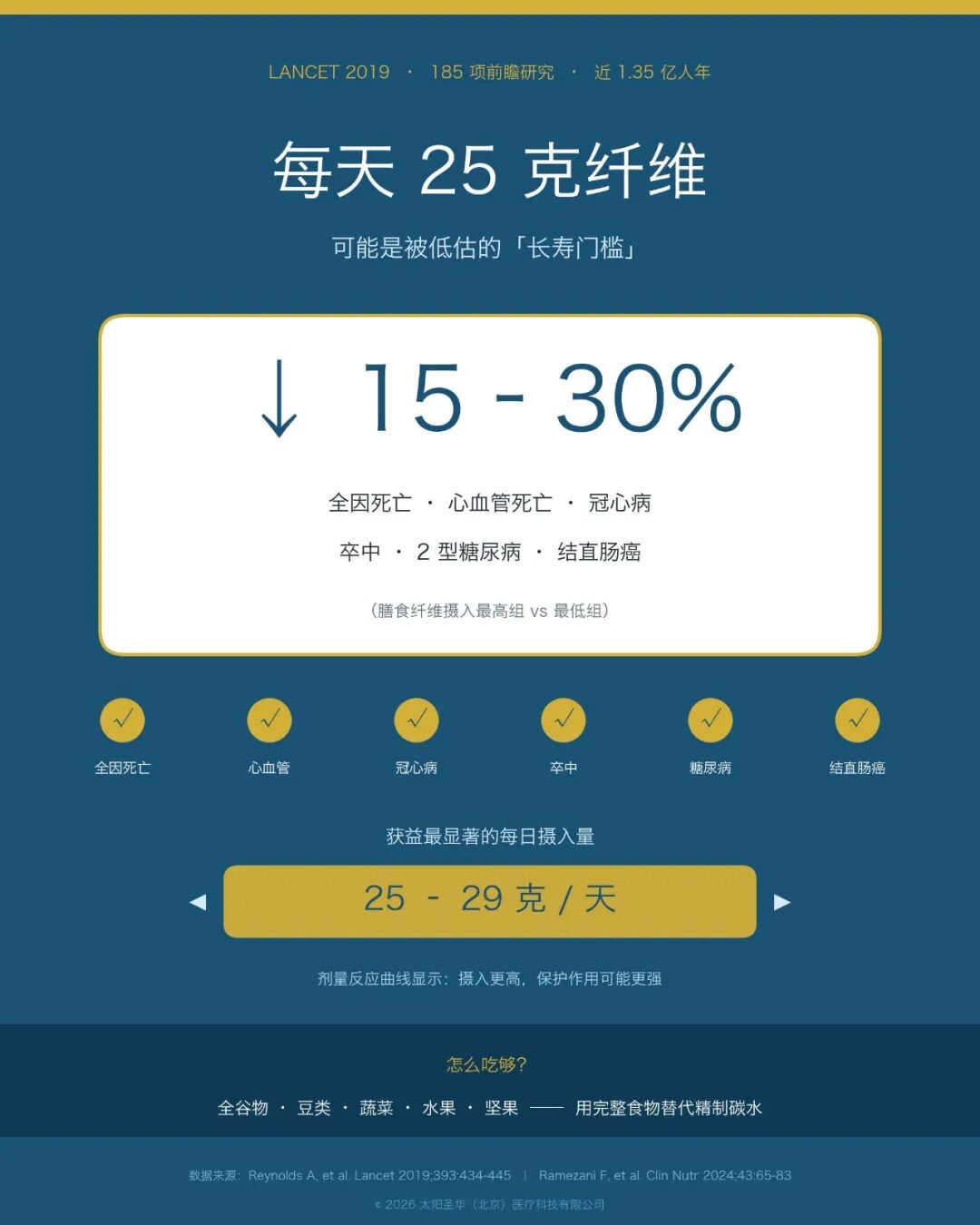
A systematic review published in The Lancet that pooled 185 prospective studies and 58 clinical trials, covering nearly 135 million person-years, found that people who ate the most dietary fiber had a 15%–30% lower risk of all-cause and cardiovascular death compared with those who ate the least, with similarly significant reductions in the risk of coronary heart disease, stroke, type 2 diabetes, and colorectal cancer[[1]]. An updated meta-analysis published in 2024 that included 64 cohort studies and 3.51 million people further confirmed this conclusion[[2]].
The most cost-effective "dose" is 25–29 grams per day, the range where benefits are most pronounced, with higher intake possibly offering additional protection.
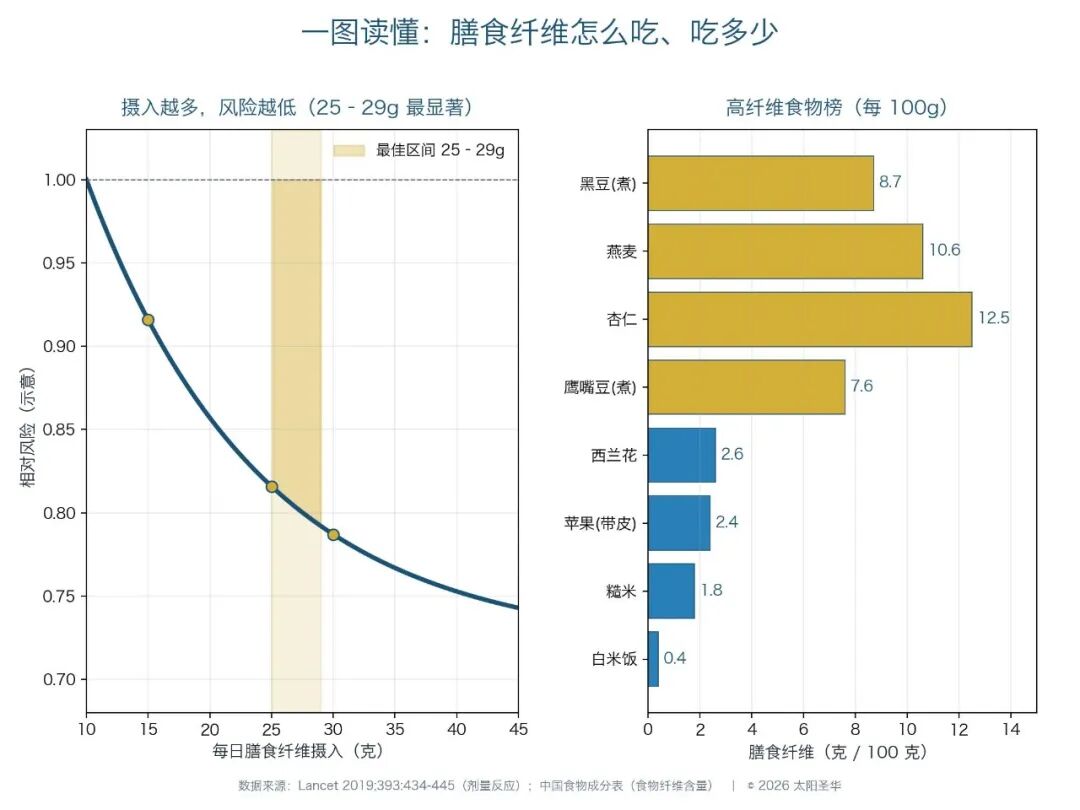
One thing you can do today: Replace half of your white rice and white flour with whole grains, then add a fist-sized portion of beans or vegetables—this alone can bring most people from the commonly insufficient 10–15 grams closer to the target. Take it step by step, and remember to drink plenty of water.
If you found this graphic helpful, feel free to save it and share it with your family; you're also welcome to hit "Like" or "Wow," and leave a comment telling us what topics you'd like to see.
✦ ✦ ✦
References
-
Reynolds A, Mann J, Cummings J, et al. Carbohydrate quality and human health: a series of systematic reviews and meta-analyses. Lancet. 2019;393(10170):434-445. PMID: 30638909.
-
Ramezani F, Pourghazi F, Eslami M, et al. Dietary fiber intake and all-cause and cause-specific mortality: an updated systematic review and meta-analysis of prospective cohort studies. Clin Nutr. 2024;43(1):65-83. PMID: 38011755.
Disclaimer: The content of this article is based on published medical literature and is intended for health education and informational purposes only. It cannot replace professional medical diagnosis, treatment, or individualized nutritional advice; please consult a doctor or registered dietitian for specific dietary adjustments.
Disclosure: This article was independently produced by Sunsheng Hua (Beijing) Medical Technology Co., Ltd., and does not involve any product promotion or commercial sponsorship.
© 2026 Sunsheng Hua (Beijing) Medical Technology Co., Ltd.