What You Lose on a Diet May Be Muscle: Eat Enough Protein to Preserve an Extra 0.43 kg
Disclaimer: This article is for health education purposes only and is intended for informational reference. It does not constitute medical advice. If you have any health concerns, please consult a qualified healthcare professional.
✦ ✦ ✦
The scale says you've lost 5 kilograms, but your waistband hasn't loosened much? Many people only realize at this point: what came off may not all have been fat.
What often gets "lost along the way" during weight loss is muscle. And protein is the key to keeping it.
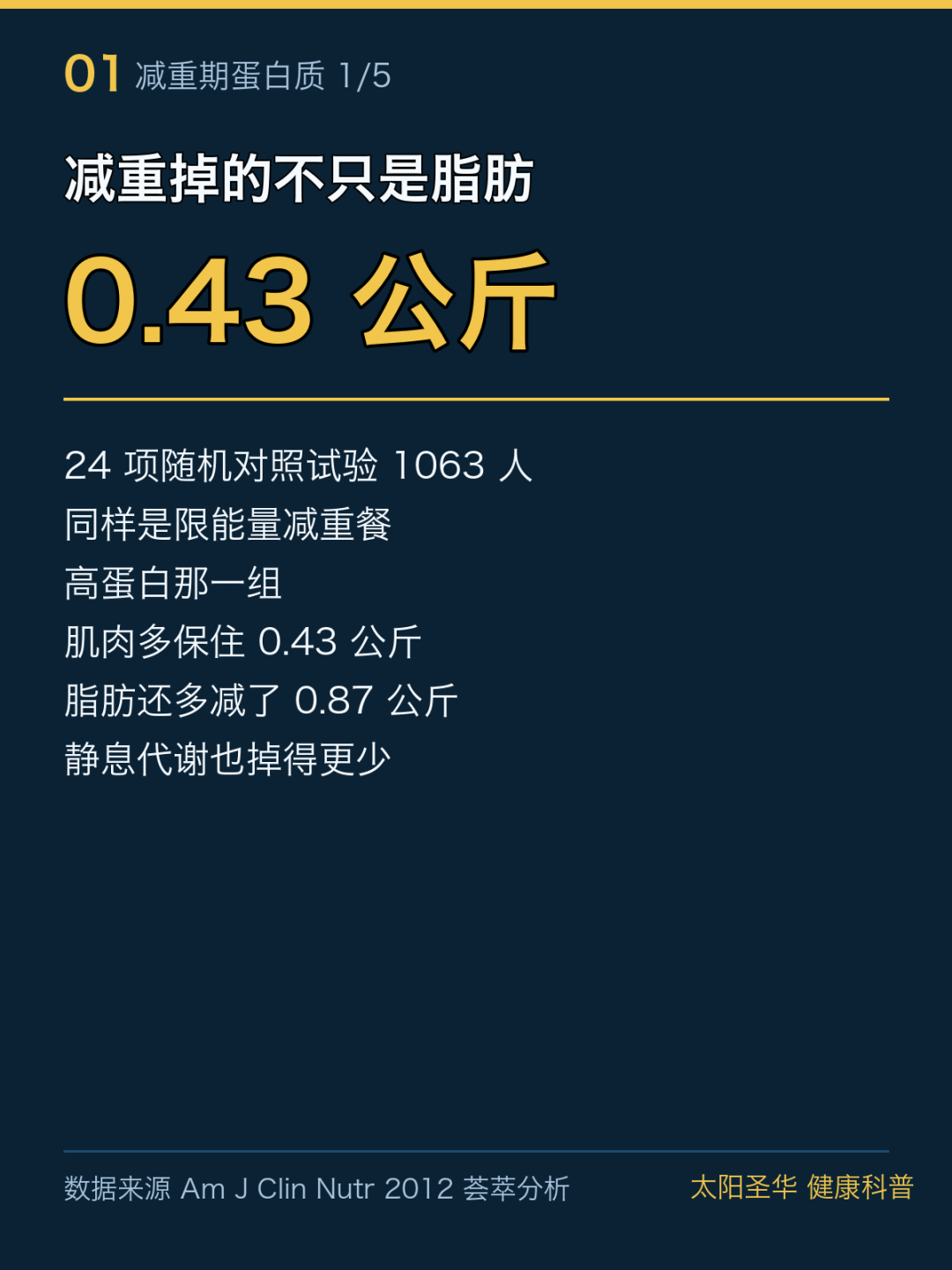
The data tells the story more clearly: a meta-analysis pooling 24 randomized controlled trials involving 1,063 people found that with the same calorie-restricted weight-loss diet, the group with a higher protein ratio lost 0.87 kg more fat, preserved 0.43 kg more muscle (fat-free mass), and even maintained more resting energy expenditure[1]. In other words, same calories, roughly the same number on the scale, but a completely different body composition.
1. How Much to Eat Each Day
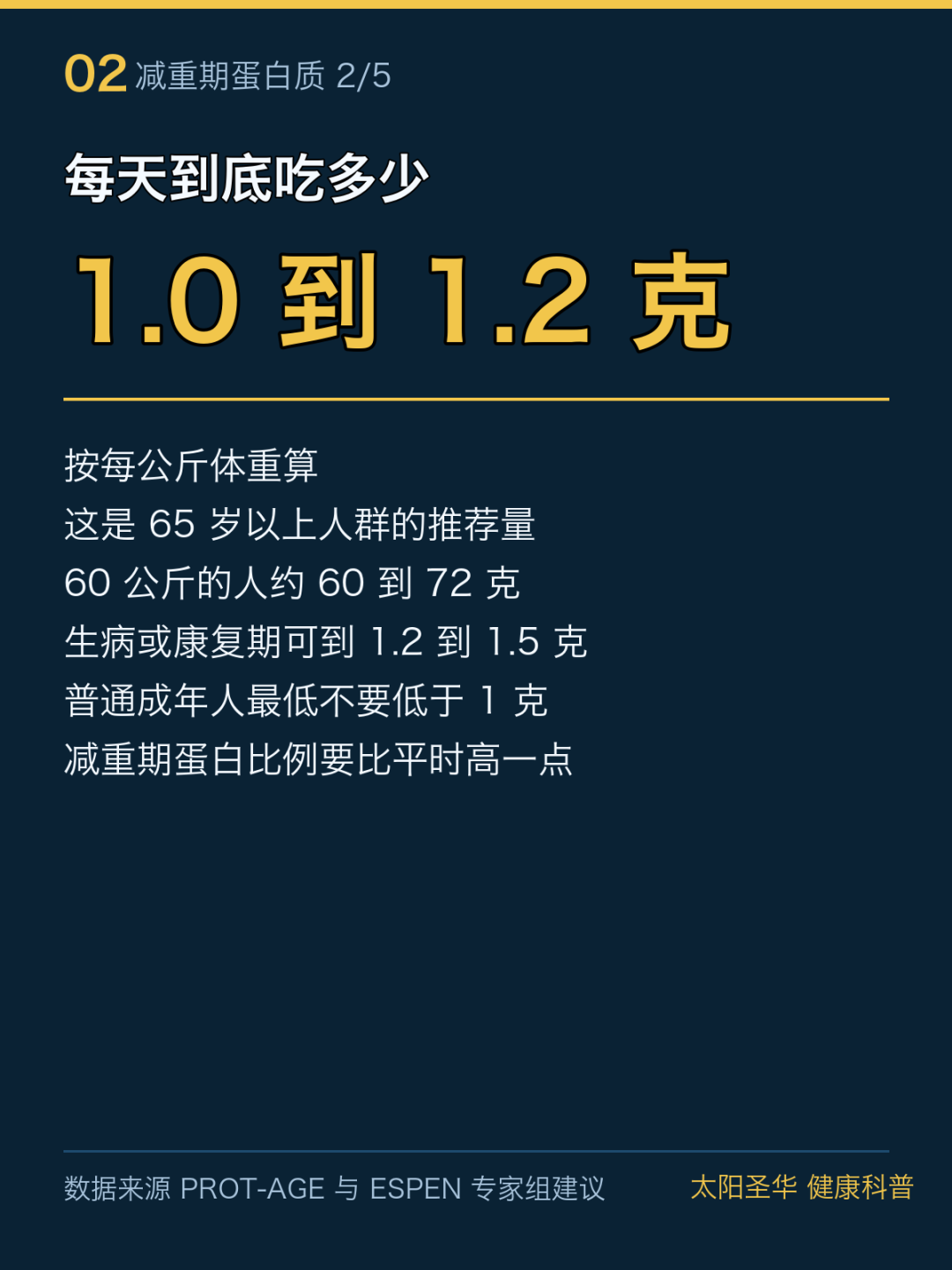
After age 65, the European PROT-AGE expert group recommends 1.0 to 1.2 grams of protein per kilogram of body weight per day[3]; if malnourished or in a period of illness or recovery, the ESPEN expert group recommends increasing to 1.2 to 1.5 grams[4]. For someone weighing 60 kg, that's roughly 60 to 72 grams per day.
Ordinary adults should not go below 1 gram per kilogram; those who are losing weight and doing strength training should aim for a slightly higher protein ratio than usual. Put in plate terms: one egg is about 7 grams, a glass of milk about 8 grams, a palm-sized piece of fish about 25 grams.
2. Getting Enough at Each Meal Is What Counts
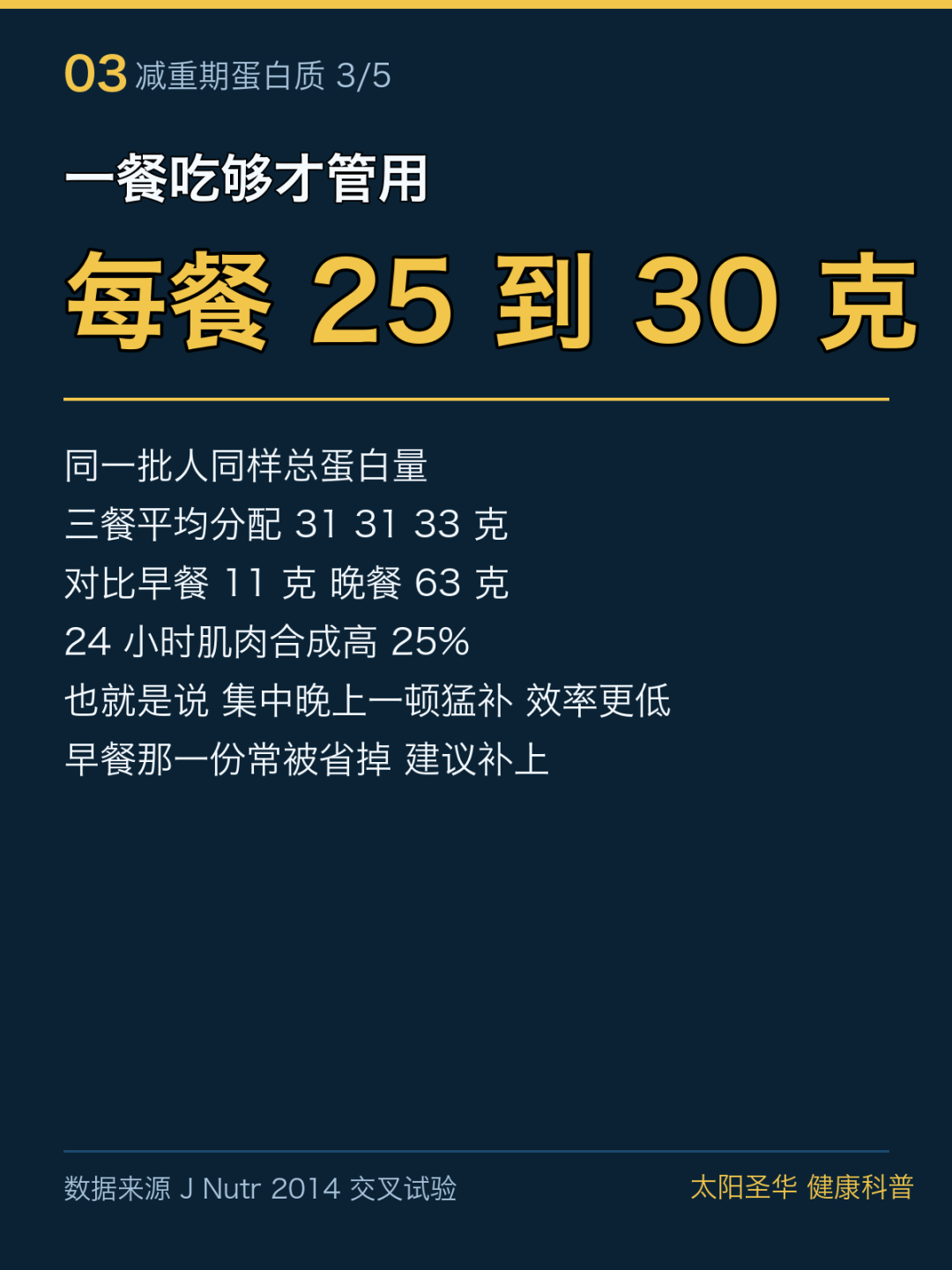
Meeting the total isn't enough—how you distribute it matters. A crossover trial divided the same amount of protein into two eating patterns: evenly split across three meals (31, 30, 33 grams), or concentrated at dinner (11 grams at breakfast, 16 at lunch, 63 at dinner). The evenly distributed group had a 25% higher 24-hour muscle protein synthesis rate[2].
The breakfast portion is often skipped, yet it determines when muscles "clock in" for the first half of the day. Congee with pickles, bread with coffee—protein often comes to less than 10 grams.
3. Why It Helps You Lose Weight
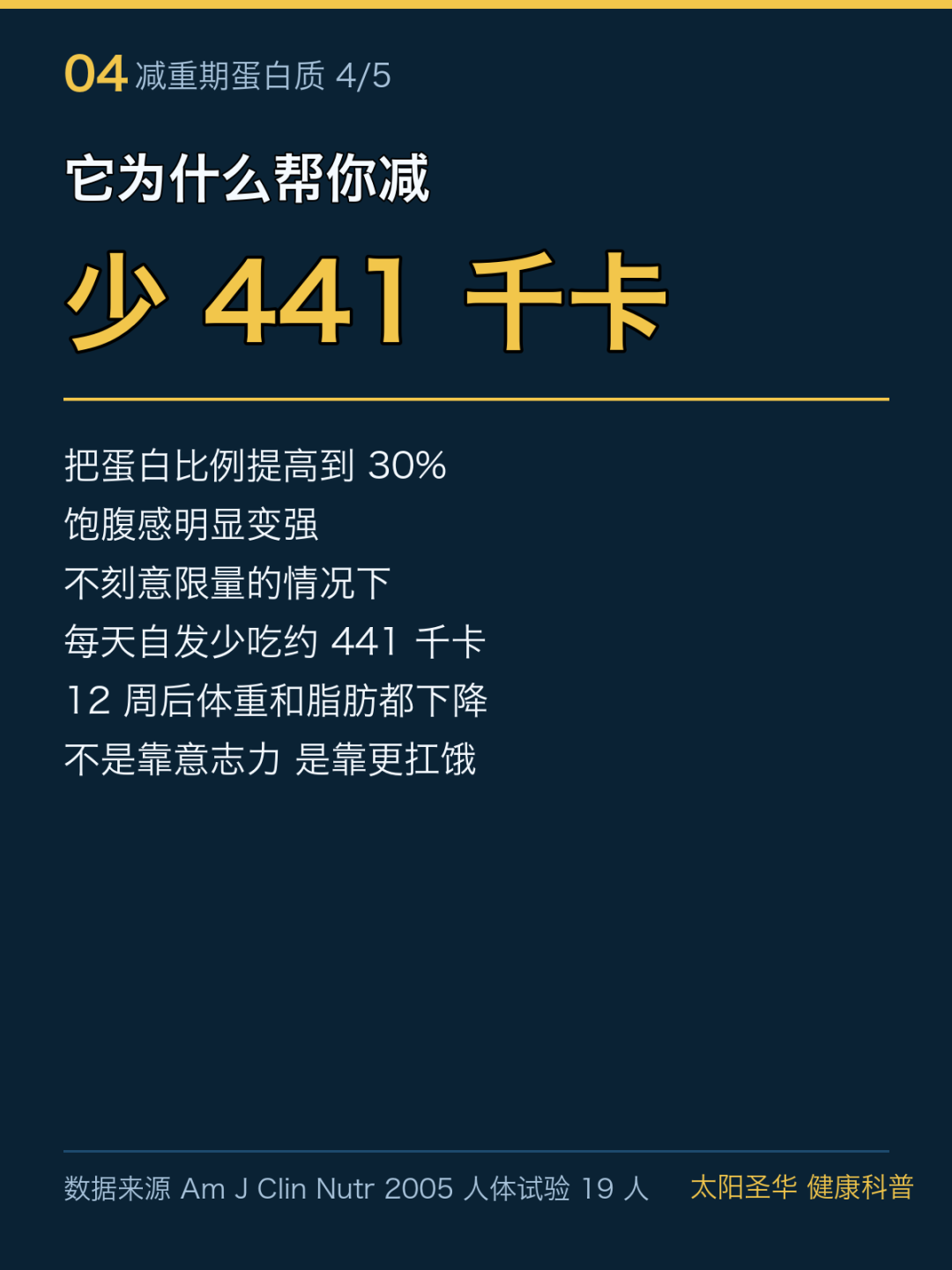
Protein keeps you fuller longer. A human trial with 19 participants raised the protein ratio to 30%, and without deliberate restriction, subjects spontaneously ate about 441 fewer kilocalories per day, with both weight and fat decreasing after 12 weeks[6].
What reliably drives weight loss has never been white-knuckling it—it's being less hungry.
4. Three Zero-Difficulty Ways to Eat
First, add an egg and a glass of milk to breakfast—about 15 grams; second, have a palm-sized portion of fish, lean meat, or soy products at lunch and dinner—about 25 grams each; third, swap snacks for unsweetened yogurt or soy milk.
Then pair it with strength training 2 to 3 times a week—protein is the raw material, training is the signal; without either one, muscle won't stay. For people over 50, the high-protein group preserved more lean body mass during weight loss[5], and this point is especially important for middle-aged and older adults.

One Thing You Can Do Today
Take a look at tonight's plate first: is there a palm-sized portion of protein? Then decide whether to add more.
The scale only tells you how much lighter you are; body composition tells you whether you're losing the right thing. Consider bookmarking this article and sharing it with friends who are losing weight but feeling more and more drained.
If this was helpful, give it a like or a "reading" — and feel free to leave a comment telling us what topics you'd like to see.
Disclaimer: This article is for health education purposes only and is intended for informational reference. It does not constitute medical advice. If you have any health concerns, please consult a qualified healthcare professional.
Conflict of interest statement: This article does not involve any drug or product recommendations and has no financial relationship with the research institutions mentioned in the text.
© 2026 Sun Saint Hua (Beijing) Medical Technology Co., Ltd.
✦ ✦ ✦
References
[1] Wycherley TP, et al. Am J Clin Nutr. 2012;96(6):1281-1298 — 24 randomized controlled trials, 1,063 people: compared with standard-protein diets, isocaloric high-protein weight-loss diets resulted in 0.79 kg more weight loss, 0.87 kg more fat loss, 0.43 kg more fat-free mass preserved (95% CI 0.09 to 0.78), and about 595.5 kJ/d more resting energy expenditure preserved. PMID: 23097268
[2] Mamerow MM, et al. J Nutr. 2014;144(6):876-880 — Crossover trial in 8 adults: evenly distributed protein across three meals (31.5/29.9/32.7 grams) versus concentrated at dinner (10.7/16.0/63.4 grams) resulted in a 25% higher 24-hour muscle protein synthesis rate. PMID: 24477298
[3] Bauer J, et al. J Am Med Dir Assoc. 2013;14(8):542-559 — PROT-AGE expert group recommendation: healthy adults over 65 should consume 1.0 to 1.2 grams of protein per kilogram of body weight per day. PMID: 23867520
[4] Deutz NE, et al. Clin Nutr. 2014;33(6):929-936 — ESPEN expert group recommendation: healthy older adults should consume at least 1.0 to 1.2 grams per kilogram of body weight per day; those who are malnourished or have acute or chronic illness, 1.2 to 1.5 grams. PMID: 24814383
[5] Kim JE, et al. Nutr Rev. 2016;74(3):210-224 — 20 randomized controlled trials: during weight loss in people over 50, the group with higher protein intake preserved more lean body mass and lost more fat. PMID: 26883880
[6] Weigle DS, et al. Am J Clin Nutr. 2005;82(1):41-48 — 19 subjects: a diet with 30% protein significantly increased satiety; without restriction, subjects spontaneously ate about 441 fewer kilocalories per day, with weight and fat decreasing after 12 weeks. PMID: 16002798