Homocysteine Slightly High? 5 Numbers to Clarify How to Manage It
This article is for health education purposes only and is for informational reference only; it does not constitute medical advice. If you have health concerns, please consult a professional doctor.
In the last few lines of a physical examination report, there is an item called homocysteine.
The value is followed by a small upward arrow. Most people glance at it and turn the page—they don't understand it, and they don't know whom to ask.
Let's start with the conclusion: when this item is elevated, it is worth managing, and fixing it is not expensive. What most people lack is not medication—it's raw materials.
First, look at a trial: risk can be reduced, but it must be reduced in the right place
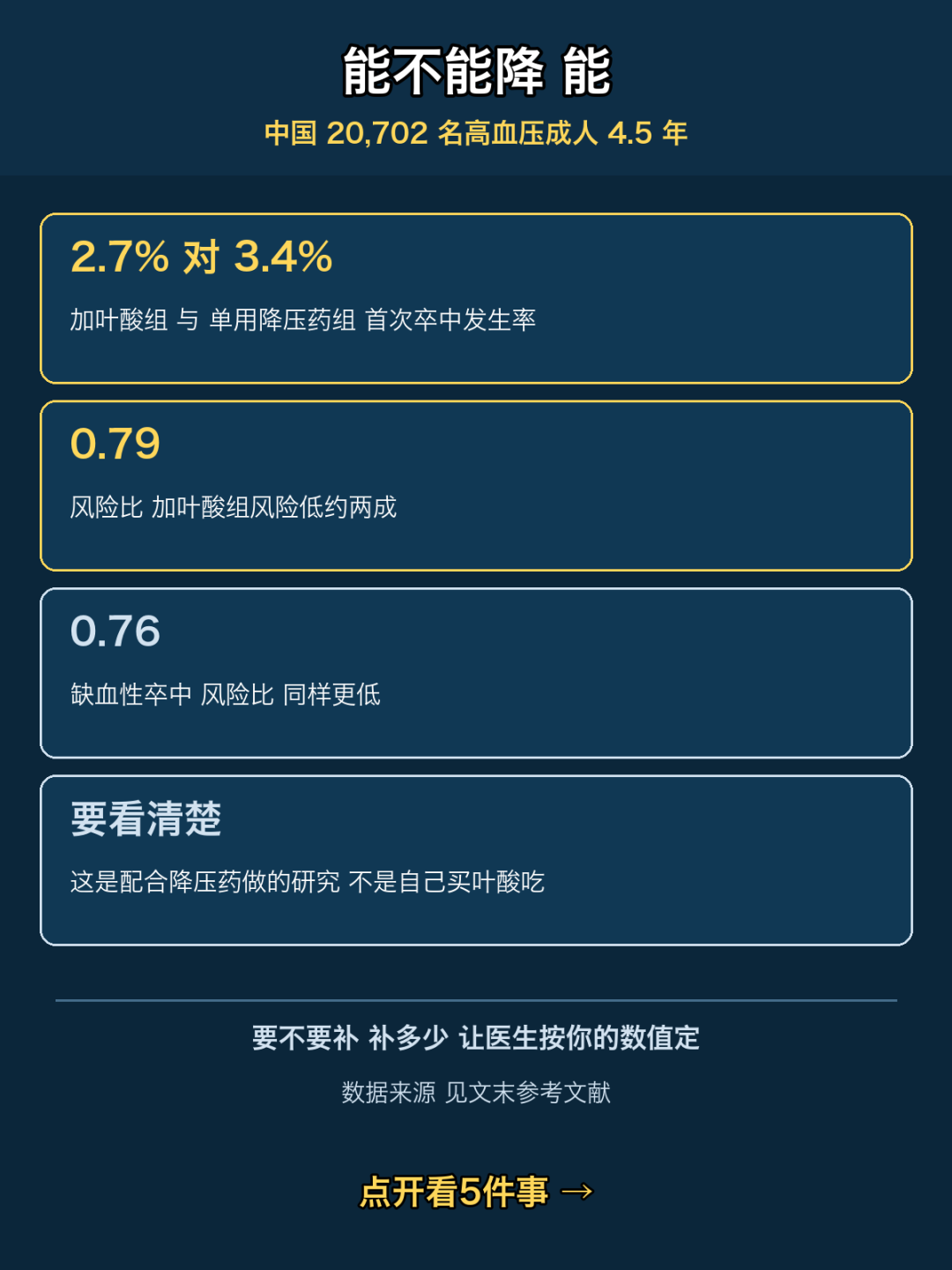
China conducted a randomized double-blind trial of 20,702 adults with hypertension, with 4.5 years of follow-up: one group took blood pressure medication plus folic acid, and the other group took only blood pressure medication. The incidence of first stroke was 2.7% in the former and 3.4% in the latter, with a hazard ratio of 0.79, meaning about a 20% lower risk[1].
In plain terms: folic acid is not supplement-marketing talk—it has been tested in randomized trials; but in the trial it was used together with blood pressure medication, not as something people should buy and take on their own.

5 numbers to make this clear
① 15—In studies of middle-aged and older Chinese populations, above 15 micromoles per liter is defined as hyperhomocysteinemia[6]; while the term "H-type hypertension" uses the threshold of 10 micromoles per liter[4]. When you get your physical examination report, first check which category you fall into.
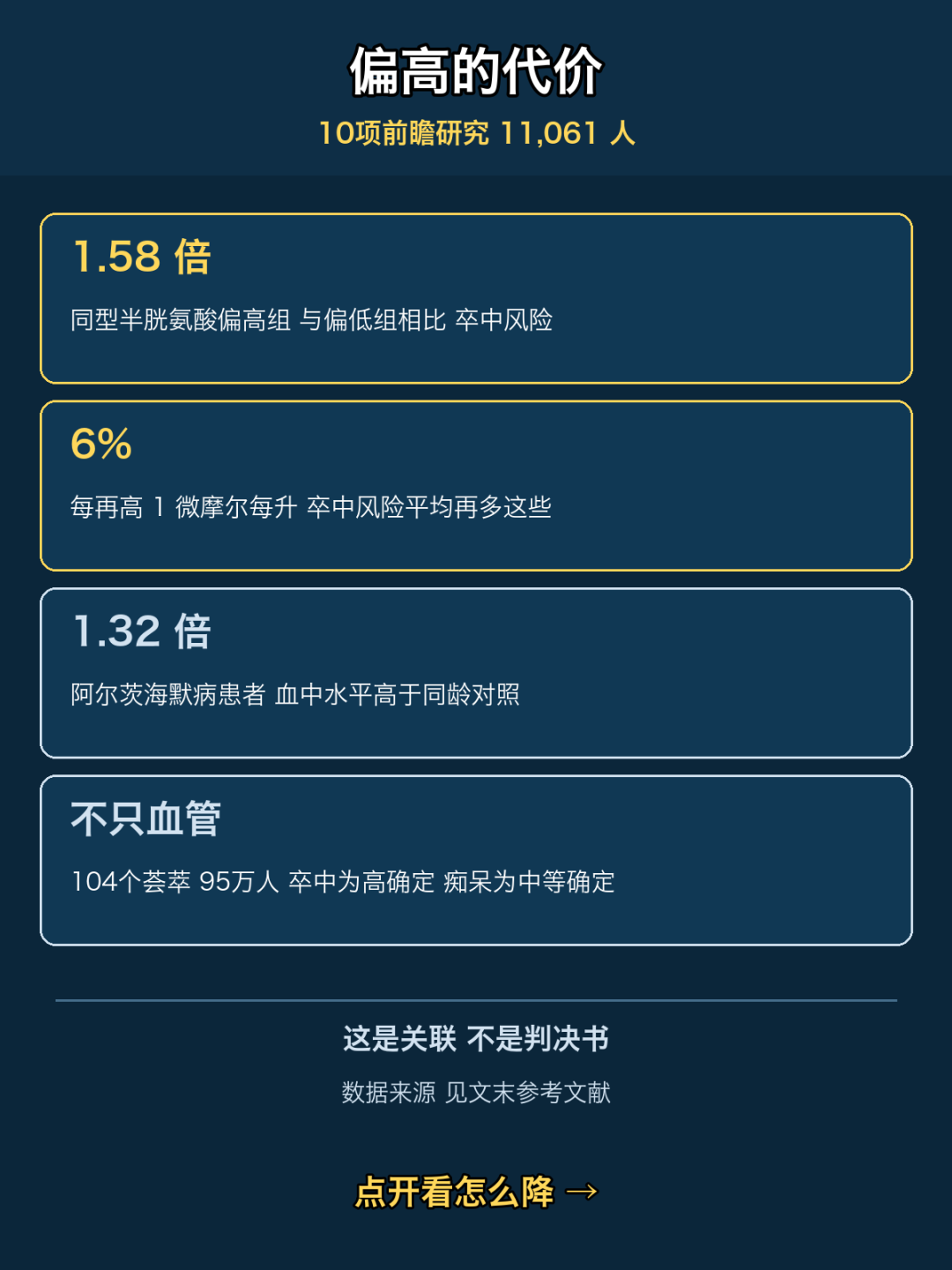
② 1.58 and 6%—A dose-response analysis of 10 prospective studies and 11,061 people: compared with the lower group, the group with higher homocysteine had 1.58 times the risk of stroke; for every additional 1 micromole per liter, risk increased by an average of another 6%[2]. It is a line that keeps going up—there is no so-called "safe step."
③ 2.7% vs. 3.4%—These are the two incidence rates from the trial above. The hazard ratio for ischemic stroke was 0.76, consistent in direction[1].
④ 1.32 times—In 35 case-control studies, the blood homocysteine levels of Alzheimer's disease patients were 1.32 times those of age-matched controls[5]. A 2026 umbrella review graded the evidence from 104 meta-analyses and more than 950,000 people: stroke, cerebral hemorrhage, fractures, and chronic kidney disease were rated as highly certain, while dementia and Alzheimer's disease were rated as moderately certain[3].
In plain terms: the evidence for this item's effect on blood vessels is stronger than the evidence for its effect on the brain.
⑤ Why it becomes high—First, not enough raw materials: folate, vitamin B12, and vitamin B6 are the three key raw materials that help transport it away; second, the MTHFR gene TT type—these people have lower enzyme activity, and this is not uncommon among Chinese people[4]; third, reduced kidney function slows excretion; fourth, smoking, heavy drinking, and excessive coffee; fifth, certain medications can affect folate metabolism, and people taking long-term medication should have their doctor review this together.
5 things you can do today
-
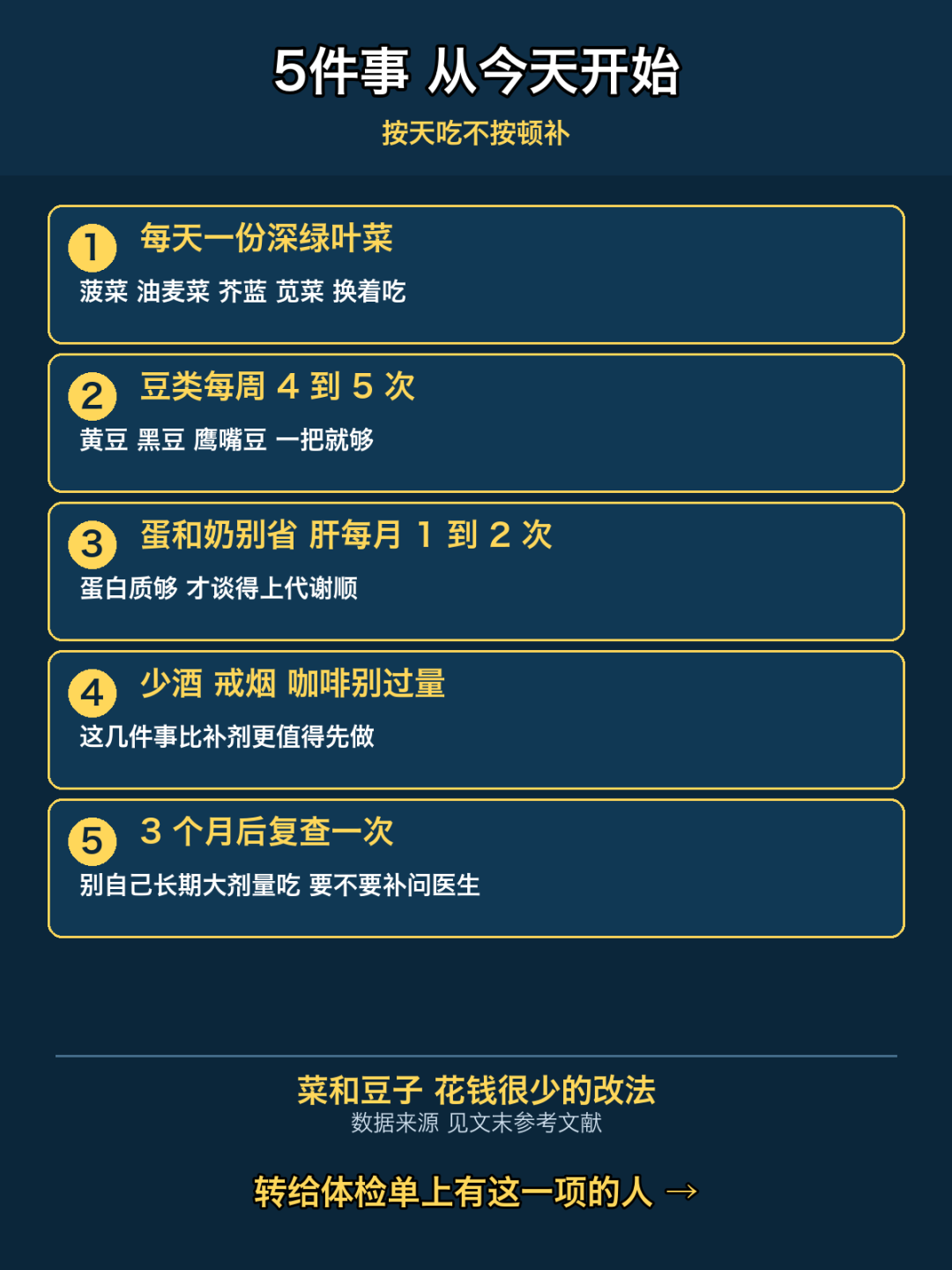
One serving of dark green leafy vegetables every day: rotate spinach, romaine lettuce, Chinese broccoli, and amaranth.
-
Beans 4 to 5 times a week: soybeans, black beans, chickpeas—one handful is enough.
-
Don't skimp on eggs and milk; animal liver 1 to 2 times a month.
-
Less alcohol, quit smoking, don't overdo coffee—these things are more worth doing first than buying supplements.
-
Recheck once after 3 months. Whether to take supplements and how much to take should be decided by a doctor based on your values and medication situation; do not take large doses on your own long term.

A reminder
One high reading does not mean the disease is confirmed. Staying up late, several consecutive days of heavy meaty meals, or drinking alcohol the night before can all push it up. What really deserves attention is: two consecutive high readings, or people who already have high blood pressure or a family history of stroke.
Whether to supplement and how to supplement—this article does not give the answer; what it gives is "knowing what to ask when you should go see a doctor."
Values can change—start with vegetables and beans.
If this has been helpful to you, give it a like or a "Wow," and feel free to leave a comment telling us what topics you'd like to see.
✦
Disclaimer: This article is a science-based interpretation of publicly available research information and does not constitute medical advice. For specific testing and supplementation plans, please consult a doctor.
Conflict of interest statement: This article does not involve any drug or product recommendations and has no conflict of interest with the research institutions mentioned in the text.
© 2026 Sun Shenghua (Beijing) Medical Technology Co., Ltd.
References
[1] Huo Y, Li J, Qin X, et al. Efficacy of folic acid therapy in primary prevention of stroke among adults with hypertension in China: the CSPPT randomized clinical trial. JAMA. 2015;313(13):1325-1335. PMID: 25771069
[2] Wu X, Zhou Q, Chen Q, et al. Association of homocysteine level with risk of stroke: A dose-response meta-analysis of prospective cohort studies. Nutr Metab Cardiovasc Dis. 2020;30(11):1861-1869. PMID: 32912796
[3] Castagna A, Cotroneo AM, Mosele M, et al. Hyperhomocysteinemia, a risk factor for various health conditions: an umbrella review of systematic reviews with meta-analysis. Aging Clin Exp Res. 2026;38(1). PMID: 42430052
[4] Cao H, Wu J, Yuan Y, et al. MTHFR C677T TT genotype associated with poor blood pressure control in H-type hypertension without folic acid: a retrospective cohort study. Front Pharmacol. 2026;17:1885629. PMID: 42760941
[5] Zhang L, Xie X, Sun Y, et al. Blood and CSF Homocysteine Levels in Alzheimer's Disease: A Meta-Analysis and Meta-Regression of Case-Control Studies. Neuropsychiatr Dis Treat. 2022;18:2391-2403. PMID: 36276430
[6] Liu C, Sun X, Lin H, et al. Association between hyperhomocysteinemia and metabolic syndrome with early carotid artery atherosclerosis: A cross-sectional study in middle-aged Chinese population. Nutrition. 2018;53:115-119. PMID: 29778949