The Same Meal, Vegetables First and Rice Second: 73% Smaller Blood Sugar Swings
This article is for general health education and informational purposes only; it does not constitute medical advice. If you have health concerns, please consult a qualified doctor.
When a takeout box is opened, many people habitually shovel in two big mouthfuls of rice first, then slowly eat the dishes alongside. It's the same meal, with not a bite of vegetables or rice different—just changing the order of bites—yet post-meal blood sugar may follow a completely different course.
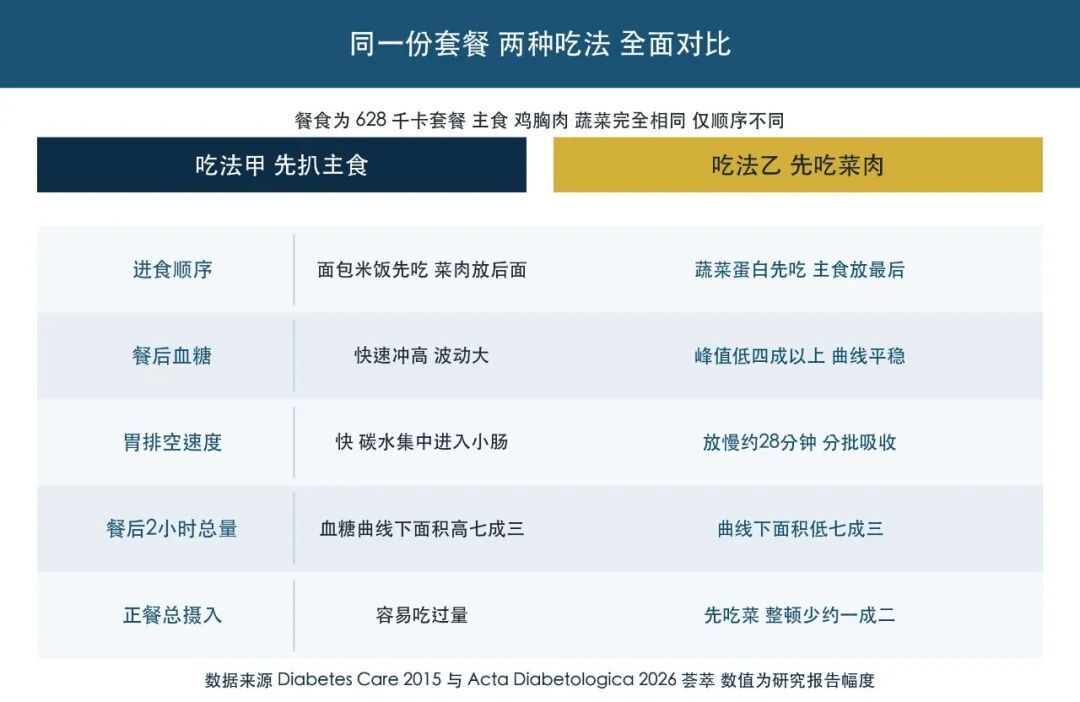
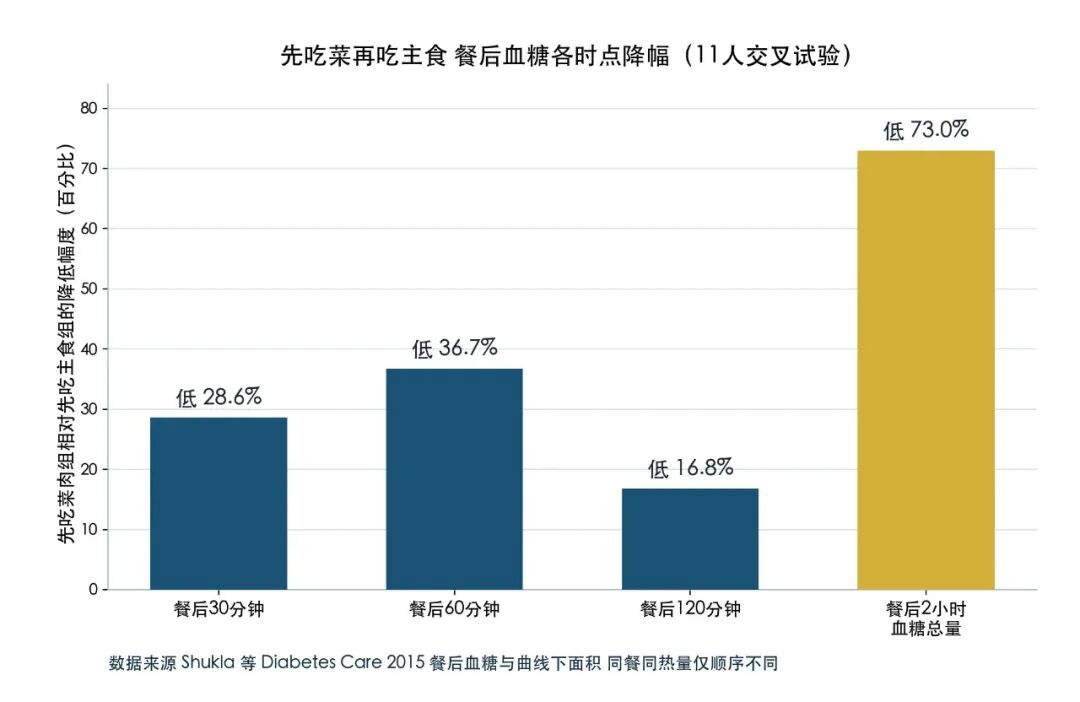
Let's start with the hard data. A crossover trial at Cornell University in the United States had 11 patients with type 2 diabetes eat the same 628-kcal meal: bread with orange juice, chicken breast, broccoli, and salad—identical in calories and ingredients. In the group that ate carbohydrates first, the area under the post-meal 2-hour blood glucose curve was 73% higher than in the group that "ate vegetables and meat first, then ate staple food 15 minutes later"; at 60 minutes post-meal, blood glucose in the vegetables-and-meat-first group was 36.7% lower[1].
1. Rice First vs. Vegetables First: What's the Actual Difference
The study repeated this experiment in people with prediabetes: 15 participants ate the same meal, and with both the "protein and vegetables first" and "vegetables first" orders, post-meal blood glucose peaks were more than 40% lower than with "staple food first," the area under the glucose curve was 38.8% lower, and the curve was smoother, no longer swinging up and down[2].
A 2026 meta-analysis pooling 17 randomized trials and 389 patients with type 2 diabetes provided a more complete accounting: eating staple food last lowered blood glucose at 60 minutes post-meal by an average of 42.7 mg/dL and at 120 minutes by 13.0 mg/dL, delayed gastric emptying time by about 28 minutes, and lowered glycated hemoglobin by an average of 0.16% over the follow-up period[3].
The difference lies not in what was eaten, but in what signal the body receives first.
2. Why Order Matters So Much
Fiber lays the groundwork. The dietary fiber in vegetables enters the gastrointestinal tract first, forming a "buffer layer" that slows the digestion and absorption of the staple food that follows, so blood sugar doesn't spike instantly[4].
Protein and fat slow gastric emptying. Eating meat, eggs, and soy products first slows the stomach's emptying rate, so carbohydrates are "released in batches" into the small intestine. The meta-analysis measured an average delay of 28 minutes in gastric emptying half-time[3]—a direct reason for steadier blood sugar.
Eating low-calorie vegetables first also reduces the total amount of the meal. A randomized crossover trial of 42 women found that eating a large portion of low-energy-density vegetable salad before the main meal reduced total lunch intake by about 12%; but if the salad was piled with high-calorie dressing and cheese, they actually ate 17% more[6]. Eating vegetables first is fine, but "vegetables first" does not mean "oil first."
Long-term adherence pays off too. In a Japanese randomized trial of 101 people followed for 24 months, patients taught to "eat vegetables first, then staple food" saw glycated hemoglobin drop from 8.3% to 6.8%, better than the 7.3% in the traditional food-exchange group[4]. A 16-week behavioral intervention in the United States also observed that the order group lost an average of about 1.6 jin more in weight, and participants who completed the intervention before the pandemic lost about 5.4 jin more[5].
3. Who This Suits, and Which Pitfalls to Avoid
Who it suits: People with a growing waistline, who get sleepy after meals, or whose fasting blood glucose is elevated on checkups; people with prediabetes and type 2 diabetes (the latter should talk to their doctor before adjusting treatment plans).
Three reminders to keep in mind:
- Order is a "bonus," not a "get-out-of-jail-free card." The primary factor determining post-meal blood sugar is still the total amount and type of staple food; eating vegetables first and then downing three bowls of rice alongside the dishes is still overeating[1][3].
- The effect in healthy young people is usually smaller than in those with abnormal glucose metabolism, so don't expect equally dramatic numbers; but "vegetables first, staple food last, eat the whole meal more slowly" does no harm to anyone.
- Long-term weight-loss evidence is currently based mainly on small-sample studies; in the 16-week trial, not all differences between the two groups reached statistical significance[5]. Treat it as a handy habit, not a miracle cure.
4. A Three-Step Method You Can Use at Tonight's Meal
- Give the first three bites to vegetables: stir-fried leafy greens, cold-dressed dishes, or blanched-and-tossed vegetables first; avoid dishes thick with starch sauce or soaked in oil.
- Then eat protein: eggs, fish and shrimp, lean meat, and soy products next; only reach for staple food when you're about 70–80% full.
- Make staple food coarser and cooler: mix whole grains into white rice, or let it cool and then reheat it—more resistant starch, slower rise in blood sugar; chew thoroughly throughout, taking at least 20 minutes per meal.
You can do this with takeout too: note "rice to come later," or eat half the side dishes before touching the rice.
When sharing a meal with others, what's shared is the amount of food; competing with yourself only requires changing the order. Consider forwarding this to whoever serves the rice at home, and to the version of yourself who always shovels down the rice first—save it and try it tonight.
If this was helpful to you, give it a like or a "Wow," and feel free to leave a comment telling us what topics you'd like to see.
✦ ✦ ✦
Disclaimer: This article is for health education purposes only and is intended for informational reference. It does not constitute medical advice and cannot replace an in-person consultation with a physician. Patients with diabetes should consult a professional doctor before adjusting their diet or treatment plan.
Declaration of Interests: This article received no sponsorship from any food, dietary supplement, or pharmaceutical company, and the author has no financial relationships with the research institutions mentioned in the text.
References:
[1] Shukla AP, et al. Food Order Has a Significant Impact on Postprandial Glucose and Insulin Levels. Diabetes Care. 2015;38(7):e98-e99. PMID: 26106234
[2] Shukla AP, et al. The impact of food order on postprandial glycaemic excursions in prediabetes. Diabetes Obes Metab. 2019;21(2):377-381. PMID: 30101510
[3] Saldarriaga-Callejas LM, et al. Nutrient intake order on metabolic outcomes in type 2 diabetes: a systematic review and meta-analysis. Acta Diabetol. 2026;63(3):399-411. PMID: 41081830
[4] Imai S, et al. A simple meal plan of 'eating vegetables before carbohydrate' for glycemic control in type 2 diabetes. Asia Pac J Clin Nutr. 2011;20(2):161-168. PMID: 21669583
[5] Shukla AP, et al. A Randomized Controlled Pilot Study of the Food Order Behavioral Intervention in Prediabetes. Nutrients. 2023;15(20):4452. PMID: 37892527
[6] Rolls BJ, Roe LS, Meengs JS. Salad and satiety: energy density and portion size of a first-course salad affect energy intake at lunch. J Am Diet Assoc. 2004;104(10):1570-1576. PMID: 15389416
© 2026 Sunshenghua (Beijing) Medical Technology Co., Ltd.