This article is for health education purposes only and is intended for informational reference; it does not constitute medical advice. If you have any health concerns, please consult a professional doctor.
✦ ✦ ✦
First, a question: how long has it been since you last took a careful look at your fasting blood glucose?
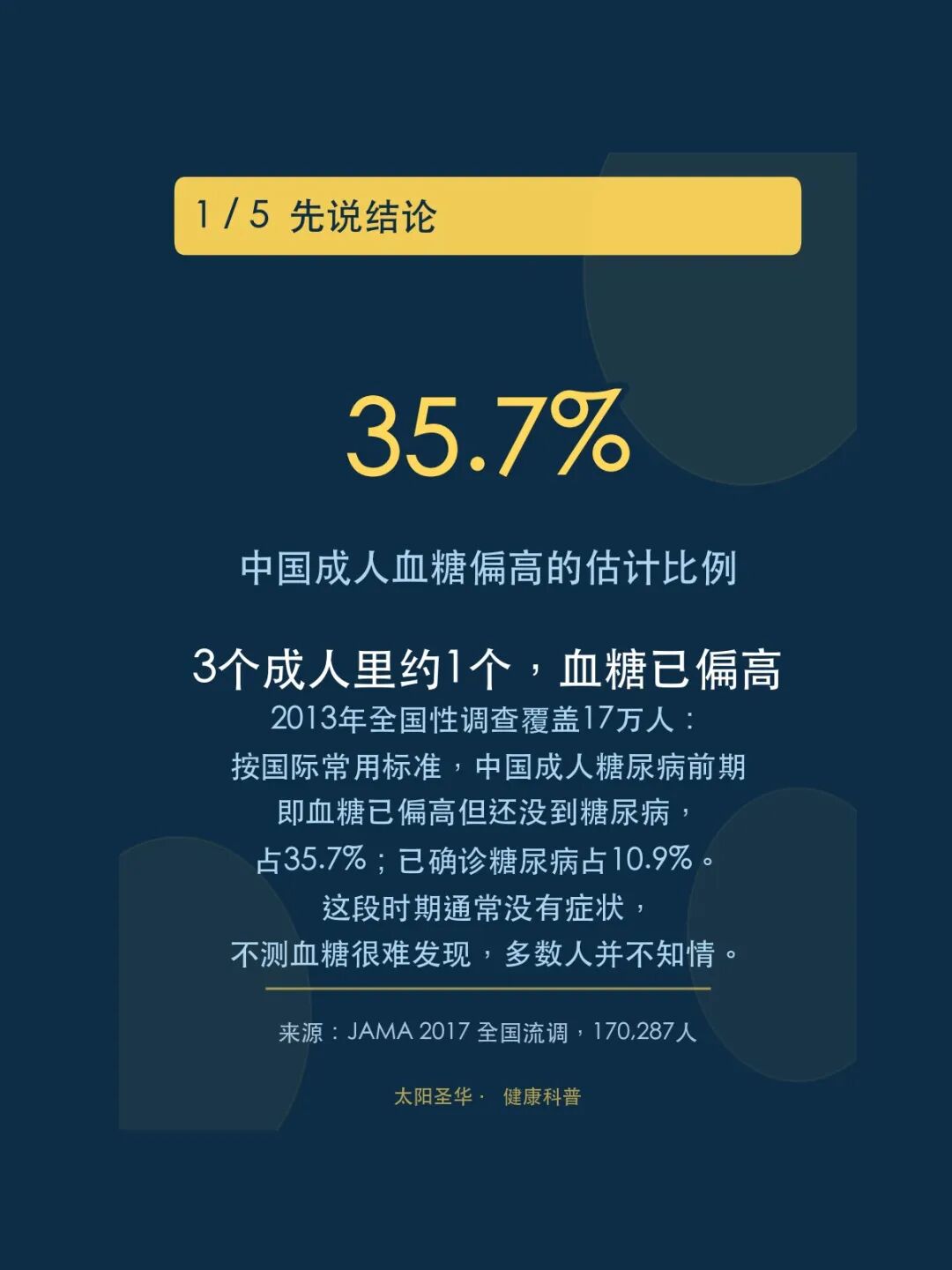
On a physical exam report, it often just says "normal," but a 2013 survey covering 170,000 people nationwide showed that, by commonly used international standards, the proportion of Chinese adults with elevated blood glucose (medically called prediabetes) is as high as 35.7%—about 1 in every 3 adults[2]. And most people don't know it.
✦ ✦ ✦
Why is elevated blood glucose so easy to overlook?
Because during this period there is almost no sensation at all: not thirsty, not losing weight, not fatigued, and appetite is unchanged. It just sits quietly on the physical exam report—fasting blood glucose between 6.1 and 6.9, or 2-hour postprandial blood glucose between 7.8 and 11.0. It hasn't reached the threshold for diabetes, but it is no longer "normal." Medically, this in-between zone is called prediabetes, and it is precisely the window of opportunity to stop diabetes at the door[5].
Note: the 35.7% above uses commonly used international standards (fasting glucose above 5.6, or HbA1c above 5.7% counts as elevated), which is more sensitive than the 6.1 commonly used on domestic physical exam reports; if your fasting blood glucose on your physical exam report has already reached 6.1–6.9, that also falls within the range where action is needed.
If you ignore it, what is quietly happening in the body?
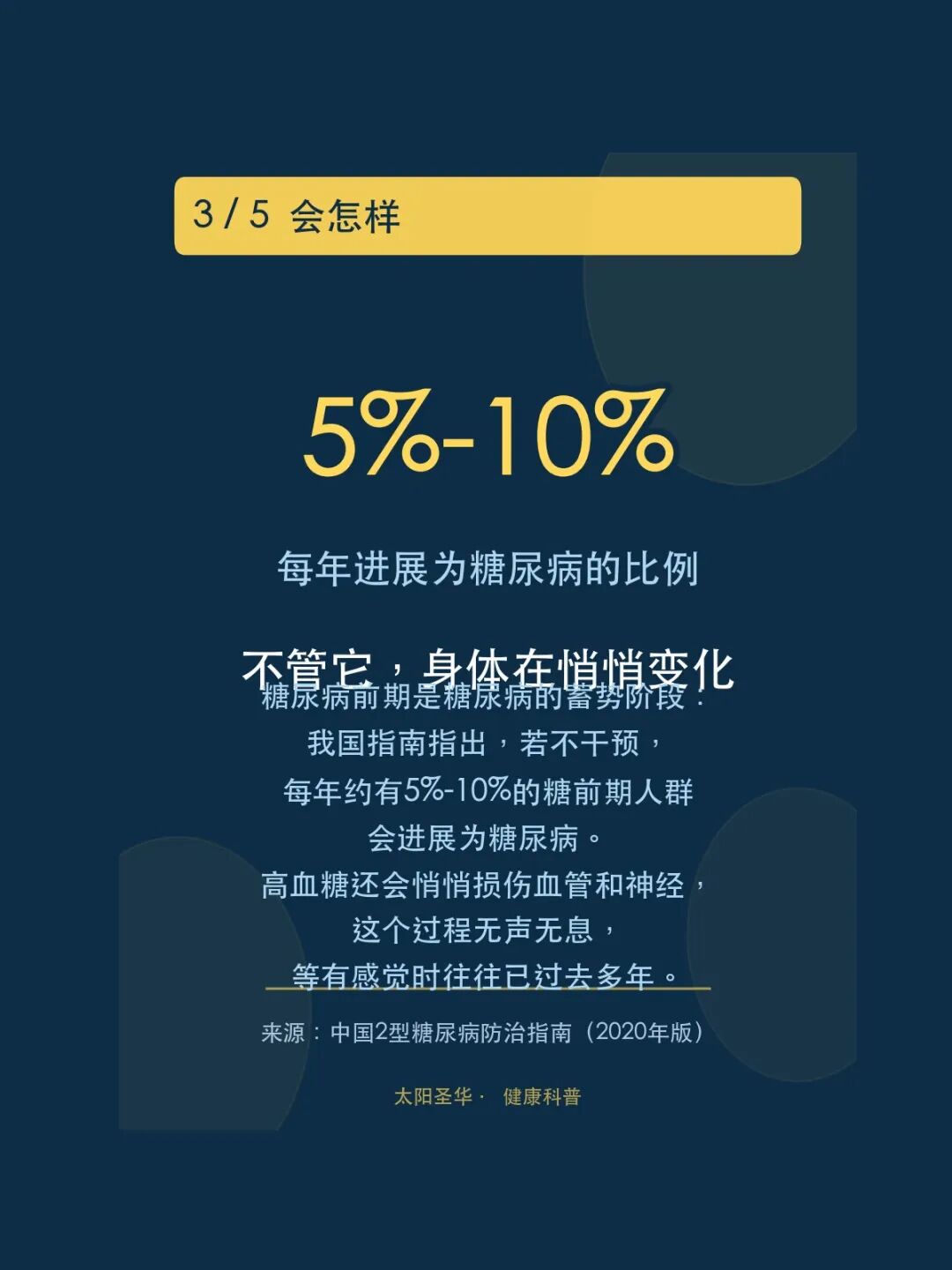
Chinese guidelines point out that if people with prediabetes do not intervene, about 5%–10% will progress to diabetes each year[5]. What's more troublesome is that the damage elevated blood glucose causes to blood vessels and nerves may already have begun before diagnosis. The good news is that at this stage, by doing a few things right, blood glucose has every chance of returning to normal.
The key evidence comes from China itself
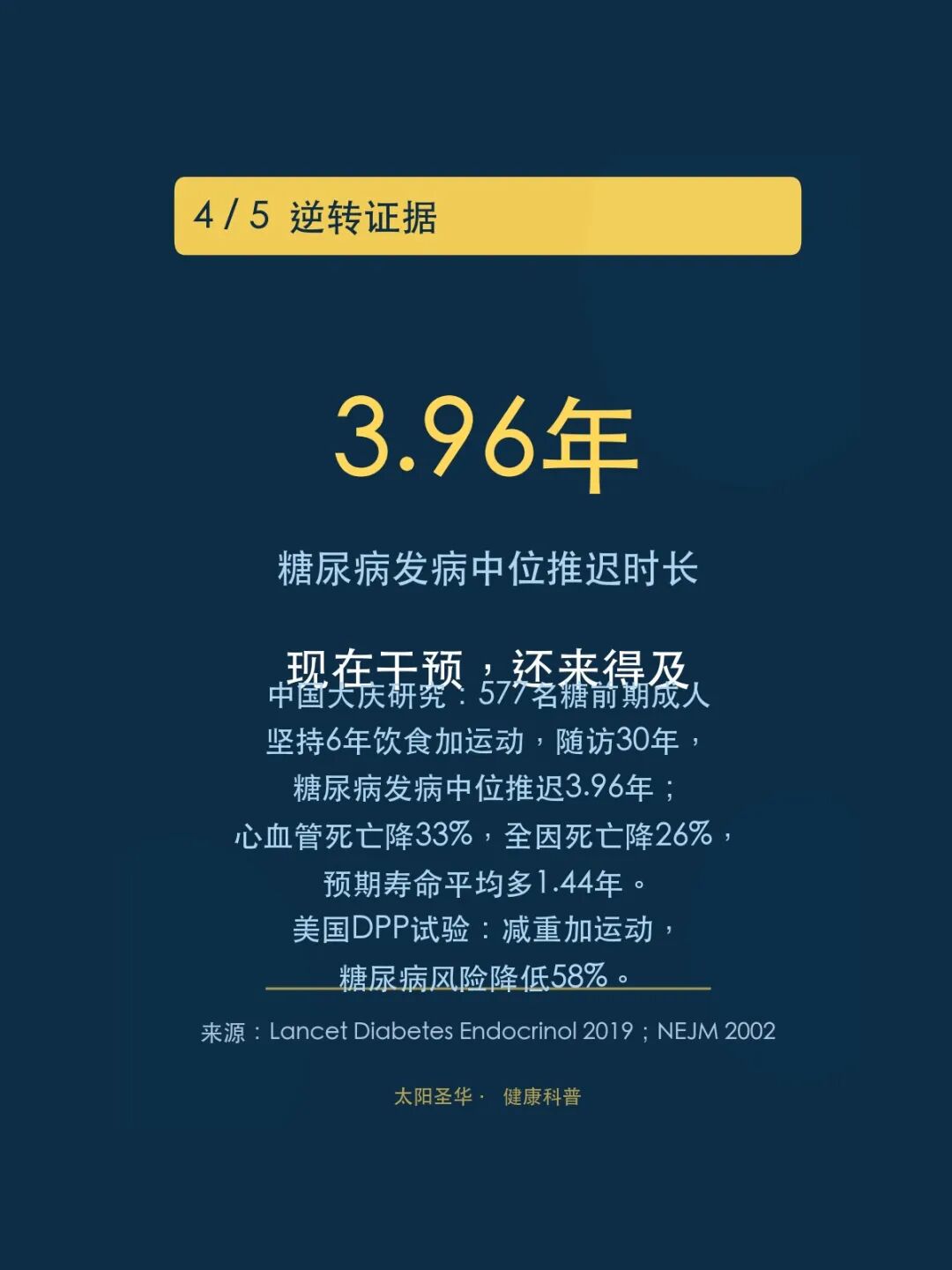
In 1986, 577 people with elevated blood glucose in Daqing, Heilongjiang, were divided into two groups: one group received 6 years of diet and exercise intervention, while the other group received only routine management. Looking again 30 years later, in the intervention group the median onset of diabetes was delayed by 3.96 years, cardiovascular death was 33% lower, all-cause death was 26% lower, and life expectancy was on average 1.44 years longer[1]. The U.S. DPP trial reached the same conclusion: weight loss plus exercise reduced the risk of diabetes by as much as 58%[3].
Starting now, do these 3 things right
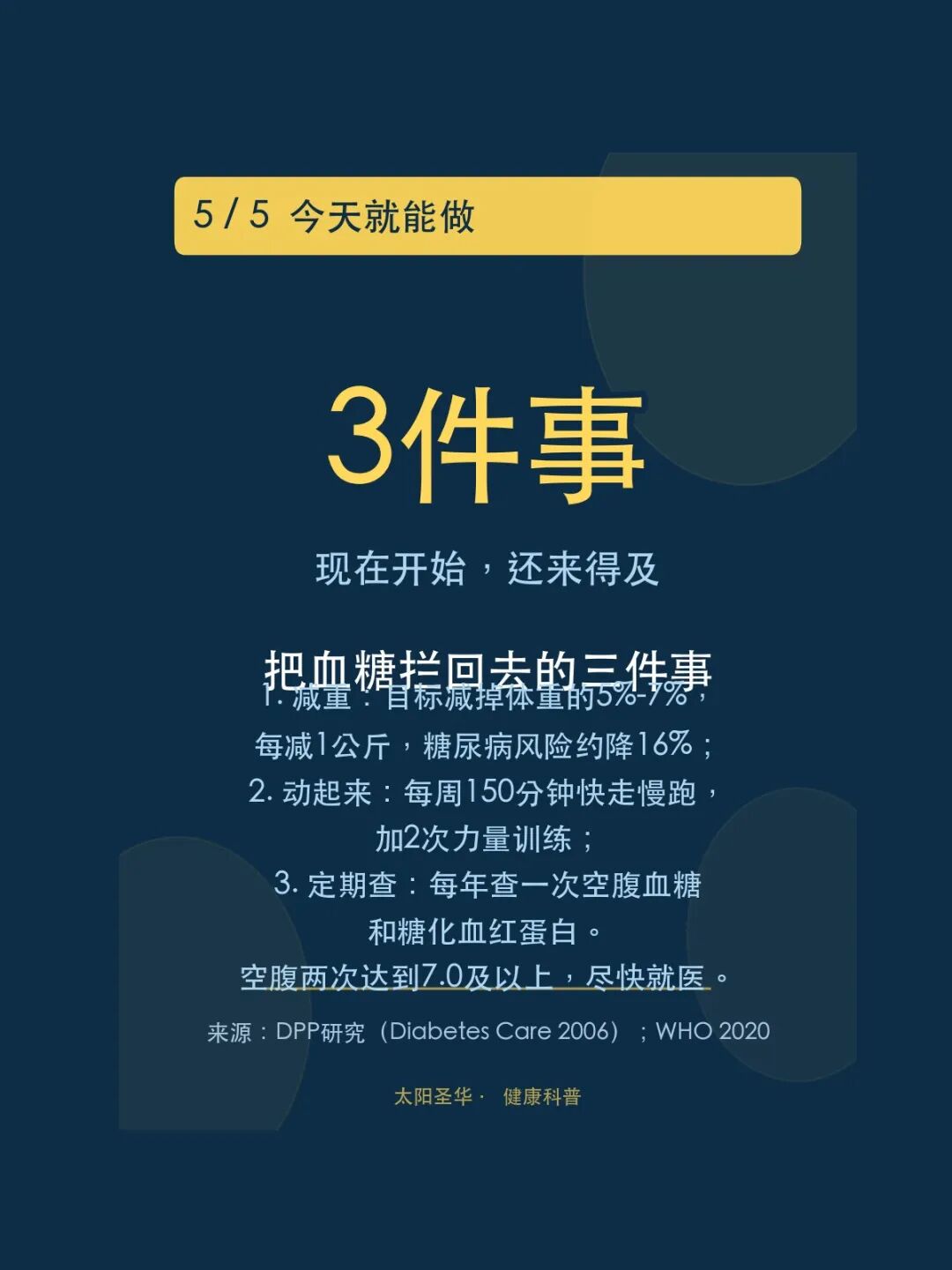
- Lose weight first: aim to lose 5%–7% of body weight. DPP data show that for every 1 kg lost, diabetes risk drops by about 16%[4].
- Get moving: 150 minutes per week of brisk walking or jogging, plus 2 sessions of strength training[6].
- Get checked regularly: measure fasting blood glucose and HbA1c once a year; if fasting glucose reaches 7.0 or above on two occasions, seek medical care as soon as possible[5].
Forward this to that family member who "has slightly high blood glucose and doesn't take it seriously"—the Daqing study tells us: managing it now still counts 30 years later. You may also want to save this self-check list, and the next time you get a physical exam report, turn to the blood glucose page first.
If this has been helpful to you, give it a like or a "Wow," and feel free to leave a comment telling us what topics you'd like to see.
✦ ✦ ✦
Disclaimer: This article is for health education purposes only and is intended for informational reference; it does not constitute medical advice. If you have any health concerns, please consult a professional doctor. Conflict of interest statement: This article does not involve any commercial promotion, and all content and data come from publicly published research and guidelines.
References
- Morbidity and mortality after lifestyle intervention for people with impaired glucose tolerance: 30-year results of the Da Qing Diabetes Prevention Outcome Study. Lancet Diabetes Endocrinol. 2019;7(6):452-461. PMID:31036503.
- Prevalence and Ethnic Pattern of Diabetes and Prediabetes in China in 2013. JAMA. 2017;317(24):2515-2523. PMID:28655017.
- Reduction in the incidence of type 2 diabetes with lifestyle intervention or metformin. N Engl J Med. 2002;346(6):393-403. PMID:11832527.
- Effect of weight loss with lifestyle intervention on risk of diabetes. Diabetes Care. 2006;29(9):2102-2107. PMID:16936160.
- Chinese Diabetes Society. Guidelines for the Prevention and Treatment of Type 2 Diabetes in China (2020 Edition). Chinese Journal of Diabetes Mellitus. 2021;13(4):315-409.
- World Health Organization. WHO guidelines on physical activity and sedentary behaviour. Geneva: WHO; 2020.
© 2026 Sun Sheng Hua (Beijing) Medical Technology Co., Ltd.