Bleeding Gums Aren't "Internal Heat"—Periodontitis Is Tied to Blood Sugar and Blood Pressure
This article is for health education and informational purposes only; it does not constitute medical advice. Please consult a professional doctor if you have any health concerns.
When you brush your teeth in the morning and see a little blood on the bristles, many people shrug it off with "internal heat" and rinse with a swig of herbal tea.
But in the eyes of a dentist, this may not be "internal heat" at all—it may be chronic inflammation of your periodontium. What's more troublesome: this inflammation won't stay politely inside your mouth.
First, a Number: About 1.1 Billion People Worldwide Have Severe Periodontitis
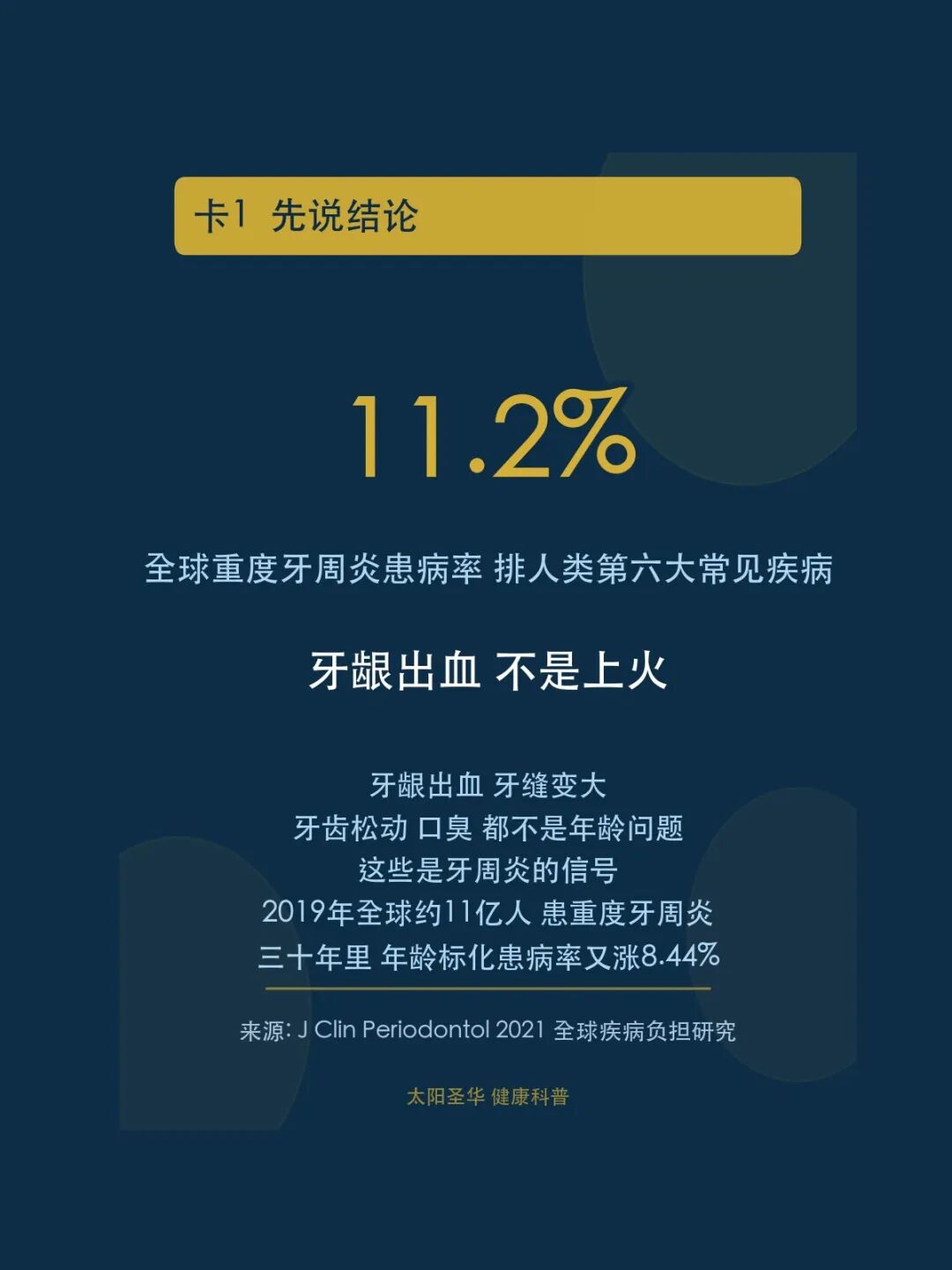
The 2019 Global Burden of Disease study estimated that approximately 1.1 billion people have severe periodontitis (uncertainty interval 800 million to 1.4 billion), accounting for 11.2% of the world's population and ranking as the sixth most common disease in humans[1]. Even more noteworthy is the trend—from 1990 to 2019, the age-standardized prevalence rose by another 8.44%[1].
Bleeding gums, widening gaps between teeth, loose teeth, and persistent bad breath are often not simply a matter of "getting older"—they may all point to the same thing: periodontitis.
The Blood Sugar Connection
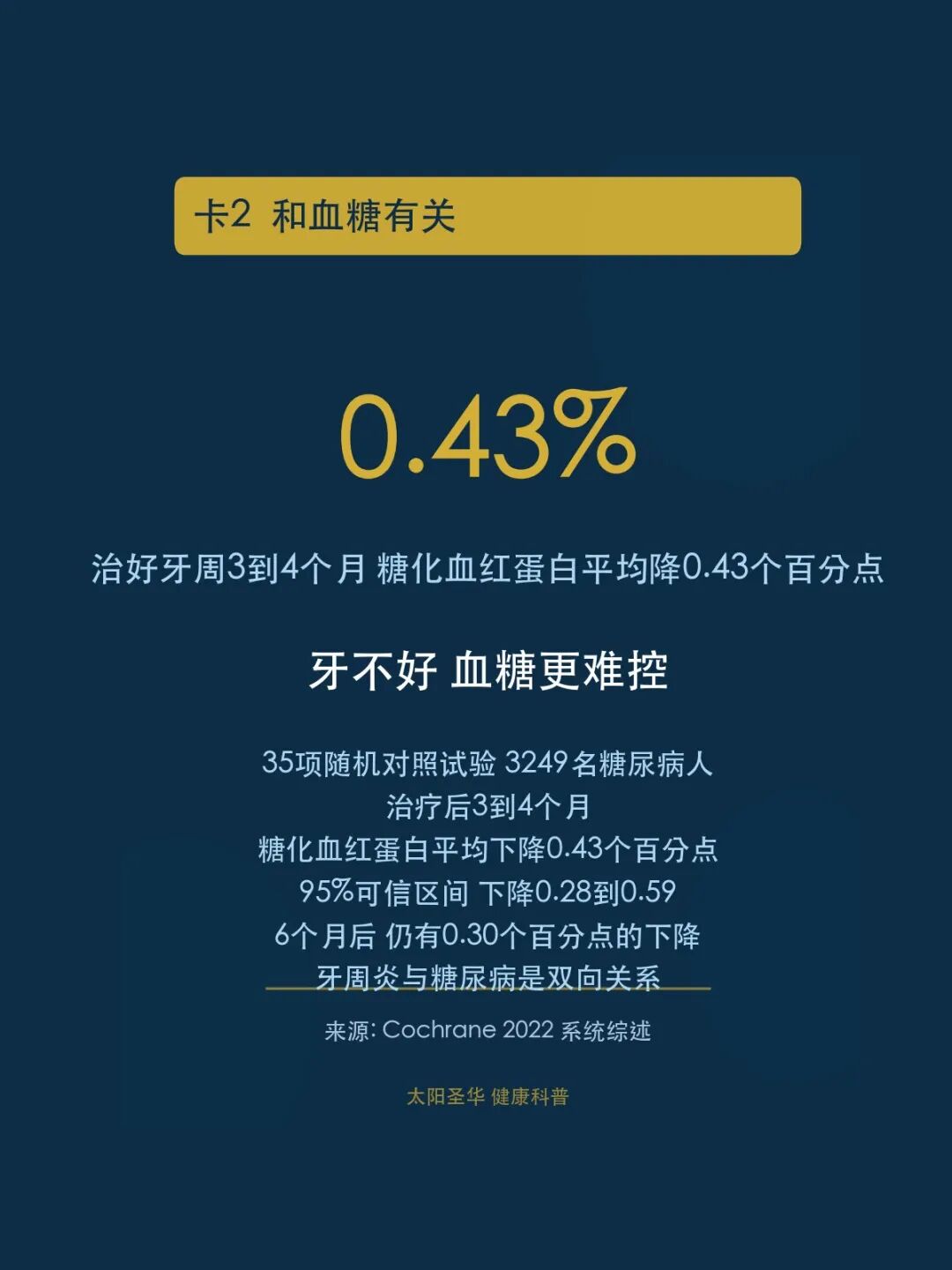
The relationship between diabetes and periodontitis is not one-directional. The joint consensus of the International Diabetes Federation (IDF) and the European Federation of Periodontology (EFP) clearly states that the two have a bidirectional relationship: people with poor blood sugar control have more severe periodontitis, and people whose periodontitis is poorly controlled have a harder time bringing their blood sugar down[2].
A Cochrane systematic review including 35 randomized controlled trials and 3,249 patients with diabetes provided quantified results: 3 to 4 months after periodontal treatment, glycated hemoglobin dropped by an average of 0.43 percentage points (95% confidence interval 0.28 to 0.59); at 6-month follow-up, a reduction of 0.30 percentage points remained[3].
In plain terms: treat your teeth, and your blood sugar may improve a bit along with it. This could mean the difference of taking half a pill less—of course, any medication adjustment must be decided by a doctor.
The Blood Pressure and Heart Connection
Periodontitis is a source of low-grade, persistent systemic inflammation. Once inflammatory factors enter the bloodstream, they can damage the vascular endothelium and drive atherosclerosis.
A meta-analysis including 81 studies, 40 of which entered quantitative pooling, found that people with moderate-to-severe periodontitis had a 22% higher risk of hypertension, and those with severe periodontitis had a 49% higher risk; compared with periodontally healthy people, patients with periodontitis had an average systolic blood pressure 4.49 mmHg higher and diastolic blood pressure 2.03 mmHg higher[4].
The joint consensus report of the EFP and the World Heart Federation (WHF) concluded that there is an independent association between severe periodontitis and cardiovascular disease—that is, this association cannot be fully explained by shared factors such as smoking, age, and body weight[5].
After Teeth Are Lost
Once the alveolar bone is resorbed to a certain degree, teeth become loose and fall out. And tooth loss itself is also a signal.
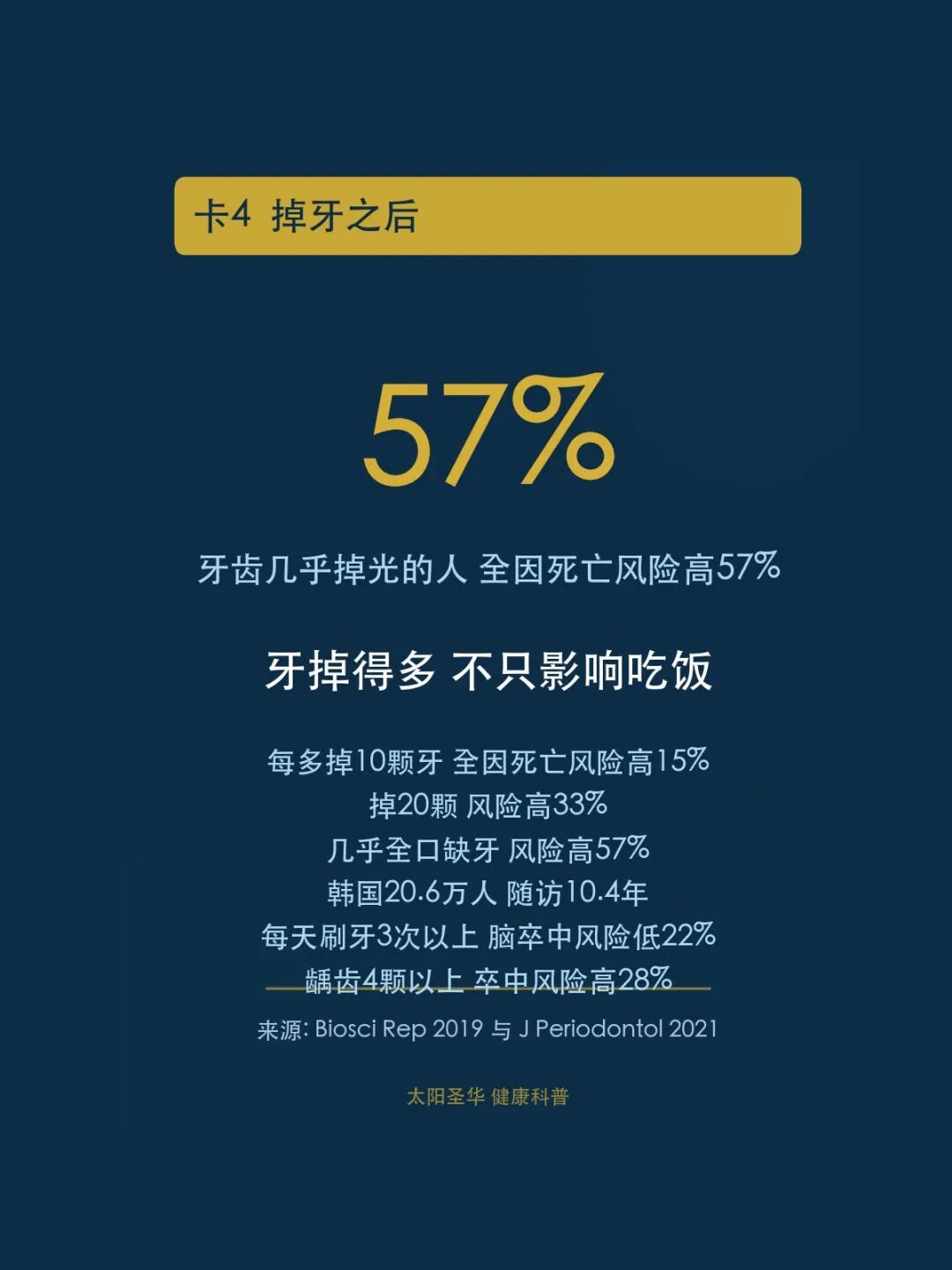
A dose-response meta-analysis including 18 prospective cohort studies showed that for every 10 additional teeth lost, the risk of all-cause mortality was 15% higher; for 20 teeth lost, 33% higher; and for those with nearly complete tooth loss, the risk was 57% higher[6].
Oral hygiene habits matter just as much. A South Korean cohort study covering 206,000 people with a median follow-up of 10.4 years found that people who brushed their teeth 3 or more times a day had a 22% lower risk of stroke, while those with 4 or more decayed teeth had a 28% higher risk of stroke[7].
5 Things You Can Do Today
- Brush enough times and long enough: Brush 2 to 3 times a day, for a full 2 minutes each time, and gently place the bristles against the gum sulcus.
- Use dental floss or interdental brushes: Once a day. The spaces between teeth are where a toothbrush can't reach—and where periodontitis often begins.
- Get a dental cleaning once a year: And get an oral checkup while you're at it. Cleaning isn't "damaging your teeth"—it removes tartar that brushing can't.
- Don't tough it out: If bleeding gums, widening gaps between teeth, or loose teeth persist for more than 2 weeks, see a dentist promptly.
- Proactively share your medical history: If you have a history of diabetes, hypertension, or cardiovascular disease, tell your dentist when you see them—it will affect the treatment plan.
One-Sentence Action
Next time you see blood when brushing, stop telling yourself it's "internal heat." Book an oral checkup, and get your blood sugar and blood pressure checked at the same time—your teeth's bill is often one that your whole-body health has already been keeping for you.
Share this with the family member who always says "toothache isn't a disease"; or save it and pull it out before your dental cleaning next year to check against.
If you find this helpful, give it a like or a "Wow," and feel free to leave a comment telling us what topics you'd like to see.
Disclaimer: This article is health education and cannot replace professional diagnosis and treatment. Whether periodontal treatment is needed and how to adjust glucose-lowering or blood-pressure-lowering regimens should follow the individualized recommendations of your dentist and internist.
Declaration of interests: This article does not involve any recommendation of drugs or devices, and has no financial relationship with the research institutions or academic journals mentioned in the text.
References
[1] Chen MX, Zhong YJ, Dong QQ, et al. Global, regional, and national burden of severe periodontitis, 1990-2019: An analysis of the Global Burden of Disease Study 2019. J Clin Periodontol. 2021;48(9):1165-1188. PMID: 34101223
[2] Sanz M, Ceriello A, Buysschaert M, et al. Scientific evidence on the links between periodontal diseases and diabetes: Consensus report and guidelines of the joint workshop on periodontal diseases and diabetes by the International Diabetes Federation and the European Federation of Periodontology. Diabetes Res Clin Pract. 2018;137:231-241. PMID: 29208508
[3] Simpson TC, Clarkson JE, Worthington HV, et al. Treatment of periodontitis for glycaemic control in people with diabetes mellitus. Cochrane Database Syst Rev. 2022;4(4):CD004714. PMID: 35420698
[4] Muñoz Aguilera E, Suvan J, Buti J, et al. Periodontitis is associated with hypertension: a systematic review and meta-analysis. Cardiovasc Res. 2020;116(1):28-39. PMID: 31549149
[5] Sanz M, Marco Del Castillo A, Jepsen S, et al. Periodontitis and cardiovascular diseases: Consensus report. J Clin Periodontol. 2020;47(3):268-288. PMID: 32011025
[6] Peng J, Song J, Han J, et al. The relationship between tooth loss and mortality from all causes, cardiovascular diseases, and coronary heart disease in the general population: systematic review and dose-response meta-analysis of prospective cohort studies. Biosci Rep. 2019;39(1):BSR20181773. PMID: 30530864
[7] Chang Y, Woo HG, Lee JS, et al. Better oral hygiene is associated with lower risk of stroke. J Periodontol. 2021;92(1):87-94. PMID: 32432793
© 2026 太阳圣华(北京)医疗科技有限公司